
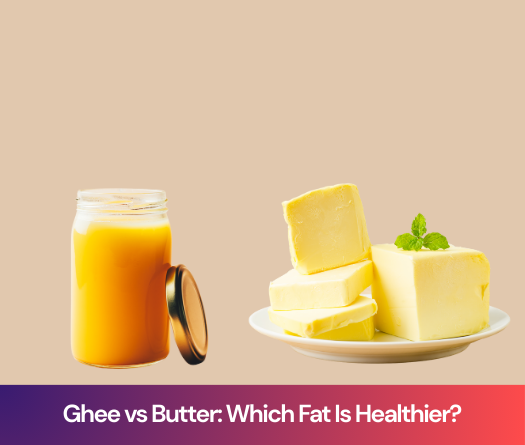
Ghee vs Butter: Which Fat Is Healthier?
Ghee vs butter explained. Compare digestion, nutrition, cooking use, and health benefits to see which fat is healthier and why Murli amrit ghee stands out.
Introduction: Why the Ghee vs Butter Debate Still Matters
Butter and ghee both come from milk. Both have been part of traditional diets for centuries. Yet today, people are confused about which one is actually better for health.
Some avoid both because they fear fat. Others use butter daily without realizing how it behaves inside the body. The truth sits somewhere in between.
The ghee vs butter debate isn’t about good versus bad. It’s about digestion, cooking stability, nutrient absorption, and how your body responds to each fat.
In this article, we’ll break down the real differences between ghee and butter, what science says, how each affects digestion and metabolism, and why traditionally prepared options like Murli amrit ghee are often easier on the body.
1. How Ghee and Butter Are Made: The First Big Difference
Butter and ghee start at the same place, but they end very differently.
Butter is made by churning cream. It contains:
- Milk fat
- Water
- Milk solids (lactose and casein)
Ghee is made by slowly heating butter to remove:
- Water
- Milk solids
What remains is pure milk fat.
Why this matters:
- Milk solids are what cause heaviness and intolerance
- Removing them improves digestibility and shelf life
Stat 1:
Ghee contains nearly 99–100% fat, while butter contains about 80% fat, with the rest being water and milk solids.
This processing difference alone explains why many people digest ghee better than butter.
2. Digestion and Gut Health: Ghee vs Butter
Digestibility is where ghee clearly pulls ahead.
Butter can be problematic for people who:
- Are lactose-sensitive
- Experience bloating or acidity
- Have weak digestion
Ghee, on the other hand:
- Is lactose-free
- Is easier to digest
- Soothes the gut lining
One key reason is butyric acid, a short-chain fatty acid found in ghee.
Stat 2:
Butyric acid makes up about 3–4% of ghee’s fat content and is known to support gut lining repair and reduce inflammation.
This is why ghee is often recommended in Ayurveda for digestive recovery, while butter is used more sparingly.
3. Nutrition Comparison: Vitamins, Fats, and Energy
Both butter and ghee provide fat-soluble vitamins, but ghee offers better bioavailability.
Nutritional highlights of ghee:
- Vitamins A, D, E, K
- Healthy saturated fats
- No lactose or casein
Nutritional highlights of butter:
- Vitamins A and D
- Contains lactose and milk proteins
- Lower smoke point
Stat 3:
Studies show that fat-soluble vitamin absorption increases by up to 50% when consumed with stable fats like ghee.
Because ghee is more concentrated and stable, the body uses its nutrients more efficiently. Traditionally prepared ghee like Murli amrit ghee retains these benefits without chemical processing.
4. Cooking Stability and Smoke Point: Which Fat Is Safer?
Cooking fat choice matters more than most people realize.
Butter burns quickly because of its milk solids. Once burned, it produces harmful compounds.
Ghee is different.
Smoke points:
- Butter: ~175°C
- Ghee: ~250°C
Stat 4:
High-heat cooking with unstable fats increases oxidative stress markers in the body by up to 30%, according to food science studies.
This makes ghee a safer option for:
- Indian cooking
- Sautéing and frying
- Daily tempering
Butter is best reserved for:
- Spreading
- Low-heat cooking
- Occasional use
5. Real-Life Example: Switching from Butter to Ghee
Consider someone who uses butter daily for cooking and experiences:
- Frequent acidity
- Heaviness after meals
- Irregular digestion
They switch to:
- 1–2 teaspoons of ghee for cooking
- Butter only occasionally
Within weeks, they often notice:
- Lighter digestion
- Fewer acid reflux episodes
- Better energy levels
This doesn’t mean butter is bad. It means ghee aligns better with daily cooking and digestion, especially in Indian climates and diets.
When Butter Makes Sense and When Ghee Is Better
Here’s a simple way to decide:
Choose butter when:
- You want flavor for bread or baking
- You cook at low heat
- Digestion is strong
Choose ghee when:
- You cook daily
- You need better digestion
- You want longer shelf life
- You prefer lactose-free fat
For daily use, traditionally prepared ghee like Murli amrit ghee fits more naturally into balanced meals.
Conclusion: Ghee vs Butter, What’s the Healthier Choice?
The ghee vs butter debate isn’t about extremes. It’s about context.
Butter has its place. But for daily cooking, digestion, and long-term health, ghee offers clear advantages. It’s more stable, easier to digest, and better suited to warm meals and Indian cooking styles.
When chosen carefully and used in moderation, Murli amrit ghee provides nourishment without stressing the gut.
If you’re choosing one fat for everyday use, ghee makes the smarter, more sustainable choice.
Frequently Asked Questions
1. Is ghee healthier than butter?
For daily cooking and digestion, ghee is generally healthier than butter.
2. Can lactose-intolerant people eat ghee?
Yes. Ghee is lactose-free.
3. Does butter raise cholesterol more than ghee?
Both should be consumed in moderation. Ghee’s fatty acid profile is often better tolerated.
4. Can butter replace ghee in Indian cooking?
Not for high-heat cooking. Butter burns faster.
5. Is Murli amrit ghee suitable for daily use?
Yes. It is traditionally prepared and easy to digest.


