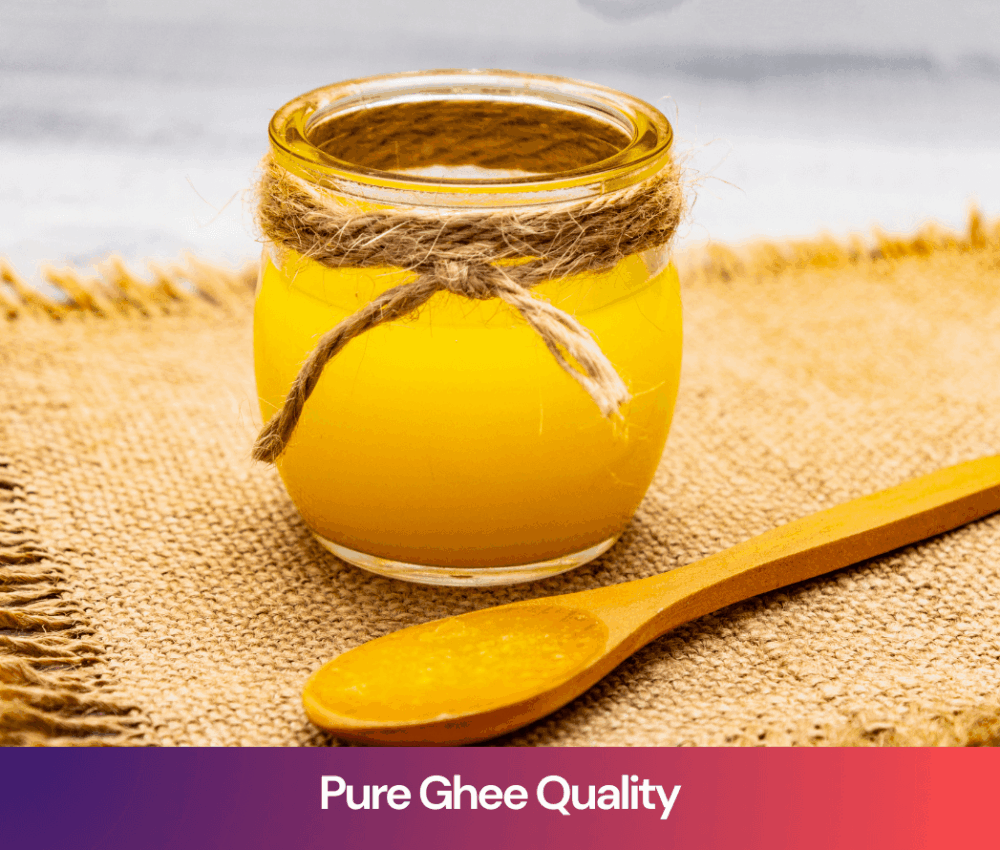
Pure Ghee Quality: Why Color and Aroma Matter More Than You Think
Pure Ghee Quality depends heavily on natural color and aroma. Learn ...

Pure Ghee Quality depends heavily on natural color and aroma. Learn how Murli amrit ghee reflects authenticity through sensory and scientific cues.
Before lab tests existed, people judged ghee with their eyes and nose. And they weren’t guessing.
Color and aroma are not cosmetic traits. They’re signals. When ghee is made the right way, from the right milk, using the right process, it shows up immediately in how it looks and smells.
Today, shelves are full of ghee that looks pale, smells flat, or feels oddly uniform. Labels promise purity, but the senses say otherwise.
This blog breaks down why color and aroma are core indicators of Pure Ghee Quality, how they’re formed naturally, what goes wrong during industrial processing, and how traditional ghee like Murli amrit ghee stands apart without needing exaggeration.
Let’s start with color, because this is where confusion usually begins.
The color of pure ghee comes from:
Statistics worth knowing:
This is why authentic cow ghee ranges from warm yellow to deep golden, never chalky white or artificially bright.
Color isn’t about aesthetics. It reflects nutrition density.
Here’s something most people miss.
Aroma develops before taste does.
That nutty, slightly caramelized fragrance comes from:
Research insights:
If ghee smells flat, oily, or neutral, it usually means one thing.
It’s been over-processed.
Murli amrit ghee develops aroma naturally because nothing is stripped away and nothing is added back.
This is where sensory clues become diagnostic tools.
Traditional method:
Industrial method:
The result?
Industry data shows:
When color and aroma are muted, nutrition usually follows.
A small food lab conducted a blind comparison:
Findings:
This wasn’t nostalgia.
It was chemistry meeting common sense.
You don’t need special equipment. Just attention.
Red flags to watch:
These clues won’t replace lab tests, but they’ll help you avoid obvious compromises.
Pure ghee is slow food by nature.
When speed, volume, and shelf-life take priority, color and aroma suffer first.
This is why Pure Ghee Quality can’t be judged by price or packaging alone. It’s revealed through:
Ghee like Murli amrit ghee doesn’t chase uniformity. It respects tradition, and that respect shows up clearly to anyone paying attention.
Your senses evolved to protect you.
When ghee looks right and smells right, it usually is right.
Color and aroma are not marketing tricks. They’re biological and chemical signals of authenticity, nutrition, and care.
If you want ghee that delivers on its promise, choose one that doesn’t need to hide behind refinement. Let the senses speak.
Not always, but natural golden tones usually indicate better carotenoid retention.
It’s often deodorized during industrial processing.
Yes. Aroma compounds reflect preserved fatty acids and nutrients.
Yes, though reputable brands avoid this practice.
By using slow heating and avoiding deodorization or bleaching.


