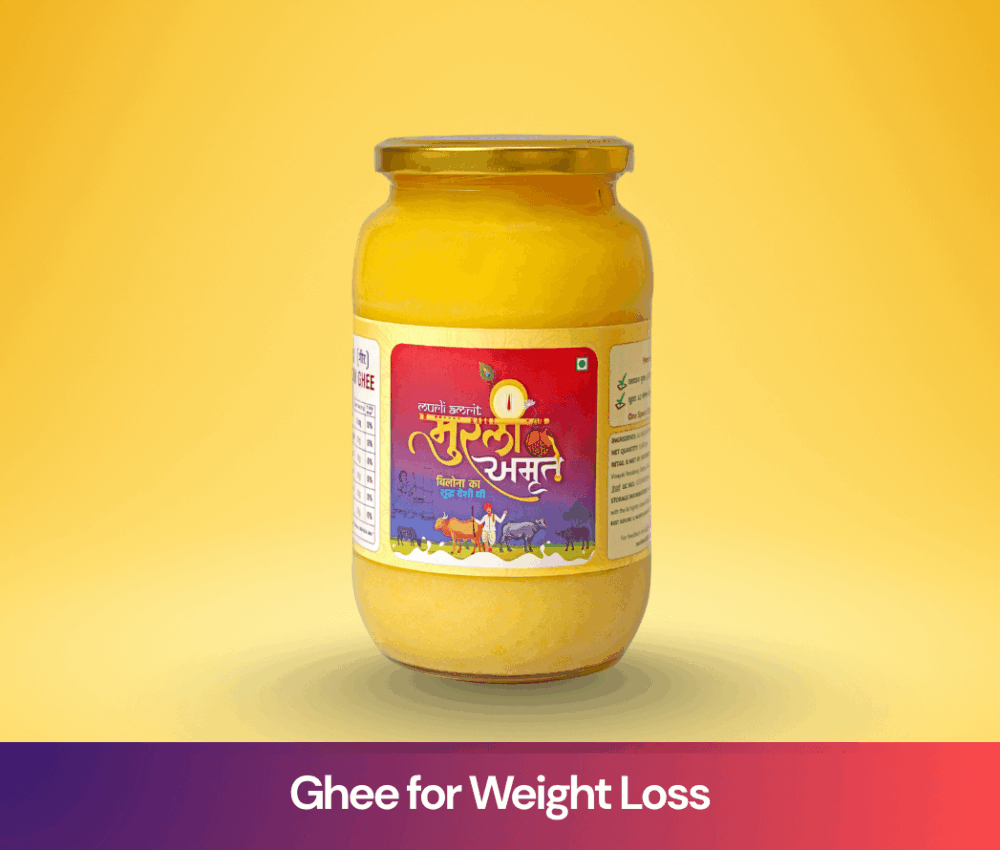
Ghee for Weight Loss: Best Ghee Recipes for Smart Weight Management
Ghee for Weight Loss explained with practical recipes. Learn how Murli ...

Ghee for Weight Loss explained with practical recipes. Learn how Murli amrit ghee supports digestion, satiety, and sustainable weight management.
Let’s clear the confusion first. Ghee doesn’t make you gain weight by default. Overeating does.
What ghee actually does, when used correctly, is help you feel satisfied, improve digestion, and reduce the constant snacking that quietly ruins weight goals. That’s why Ghee for Weight Loss is no longer a contradiction. Nutritionists, Ayurveda practitioners, and everyday home cooks are slowly agreeing on one thing: the right fat, used the right way, supports sustainable weight management.
This blog breaks down how ghee fits into a weight-focused diet, why quality matters, and the best ghee recipes for weight management using traditionally prepared options like Murli amrit ghee.
Weight loss is less about eating less and more about eating smarter.
Ghee is a source of healthy fats, especially short-chain and medium-chain fatty acids, which the body uses differently from refined oils.
Here’s what that means in practice:
Key data points:
This is why blindly cutting fat often backfires.
Most weight struggles don’t come from ghee. They come from refined vegetable oils used daily without thought.
When you cook with ghee, especially Murli amrit ghee, you naturally use less while feeling more satisfied.
That’s a quiet win for calorie control.
These recipes are simple, filling, and designed to keep blood sugar steady. No extremes. No fad combinations.
A balanced one-pot meal that supports digestion.
Why it works:
Use just 1 teaspoon of ghee per serving. That’s enough.
Perfect for lunch or early dinner.
How to prepare:
Nutrition insight:
Roasting vegetables in ghee improves absorption of fat-soluble vitamins by up to 30%.
Dal doesn’t need swimming fat.
A teaspoon of ghee added at the end:
This is where quality ghee matters more than quantity.
An underrated weight-loss meal.
Why it works:
Ghee helps bind flavours and reduces the need for excess seasoning.
Not a magic drink, but helpful for some.
Use carefully:
Many report improved bowel movement and reduced bloating over time.
Ghee helps weight management only when portions make sense.
Here’s a practical guide:
Important stat:
People consuming moderate healthy fats are 25% more likely to stick to long-term diet plans than those on restrictive low-fat diets.
Consistency beats extremes every time.
A family replaced refined cooking oil with ghee for daily meals.
After 12 weeks:
No drastic diet changes. Just better fat choices.
This is how sustainable weight management actually works.
Ghee isn’t the enemy. Mindless eating is.
When you:
You support digestion, satiety, and long-term weight balance.
1. Can ghee really help with weight loss?
Yes, when used in moderation, it improves satiety and reduces overeating.
2. How much ghee should I consume daily?
Usually 1–2 teaspoons per day is enough.
3. Is ghee better than oil for weight management?
Ghee is more stable and satisfying, often leading to lower overall intake.
4. Can I eat ghee daily while dieting?
Yes, daily use in small amounts works better than occasional excess.
5. Which ghee is best for weight-conscious cooking?
Traditionally prepared options like Murli amrit ghee are preferred.