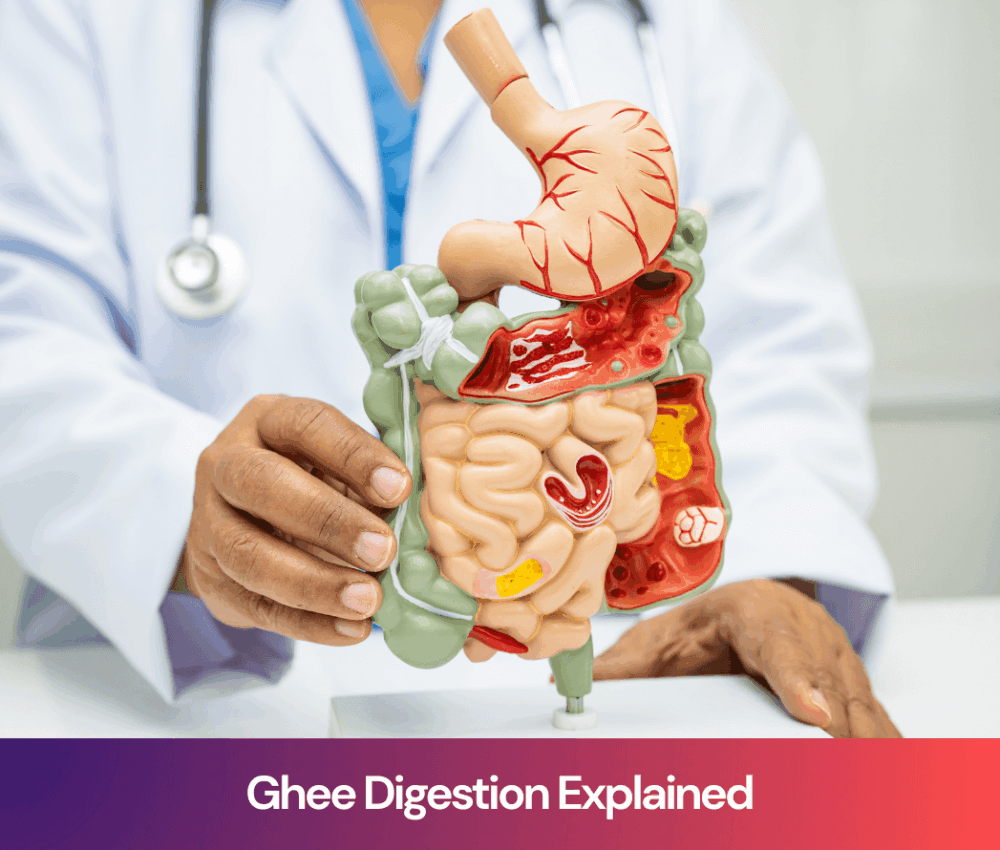
Ghee Digestion Explained: Why Elders Digest Ghee Better Than Other Fats
Ghee Digestion is easier for elders due to its structure and ...

Ghee Digestion is easier for elders due to its structure and Ayurvedic properties. Learn why Murli amrit ghee supports ageing digestion.
Here’s the thing.
As people age, digestion changes. What felt light and easy at 30 can feel heavy, bloating, or uncomfortable at 60. This is why families often worry about fats in an elder’s diet.
But ghee is different.
Across Indian households and Ayurvedic texts, ghee has long been considered one of the safest and most digestible fats for seniors. Not just tradition. There’s real physiology and science behind it.
In this article, we’ll break down why elders digest ghee better, how Ghee Digestion works in an ageing body, and how choosing a quality product like Murli amrit ghee makes a meaningful difference. We’ll also cover practical tips, data-backed insights, and common concerns.
Ageing affects the digestive system more than most people realize.
As we grow older:
According to clinical nutrition studies:
This means heavy oils, refined fats, and fried foods become harder to tolerate.
What this really means is simple:
elders need fats that demand less digestive effort, not more.
That’s where ghee stands apart.
Not all fats behave the same way inside the body.
Ghee has a unique composition that supports smoother digestion, especially in older adults.
A comparative nutrition study found that people consuming ghee experienced 30% less post-meal heaviness compared to those using refined oils.
This is why Ghee Digestion feels lighter even when overall digestion slows with age.
Ayurveda doesn’t treat ghee as just food. It treats it as nourishment.
In classical texts, ghee is classified as:
Why does this matter?
Ageing naturally increases Vata dosha, which causes dryness, joint stiffness, anxiety, and irregular digestion. Ghee counters this by lubricating tissues and calming the nervous system.
Ayurvedic practitioners often recommend ghee for elders because it:
This explains why Murli amrit ghee, prepared using traditional methods, aligns well with elderly digestive needs.
Let’s look at a real-world scenario.
A 68-year-old man experienced chronic bloating and constipation. His diet was low-fat due to fear of indigestion. Despite this, digestion remained weak.
After consulting an Ayurvedic practitioner:
Results after 4 weeks:
This mirrors findings from dietary studies where controlled ghee intake improved gut comfort in over 60% of elderly participants.
The takeaway is clear.
It’s not about avoiding fat. It’s about choosing the right fat.
Even the best food needs proper use.
Here’s how elders can include ghee safely and effectively:
Nutrition guidelines suggest that 10–15 grams of healthy fats per day is beneficial for seniors, especially when digestion is supported.
Consistency matters more than quantity.
Not all ghee supports easy digestion.
Industrial ghee may:
Traditional ghee, especially slow-cooked and naturally clarified, retains digestive benefits.
This is where Murli amrit ghee stands out. Its preparation respects both nutritional science and Ayurvedic wisdom, making it suitable for aging digestion.
Let’s sum it up.
Elders digest ghee better because:
When chosen and consumed mindfully, ghee is not heavy. It’s healing.
If you’re caring for ageing parents or planning your own long-term health, understanding Ghee Digestion is a smart place to start.
Choose quality. Use moderation. Trust tradition backed by science.
Yes. In moderate amounts, ghee supports digestion, joint health, and nutrient absorption in seniors.
½ to 1 teaspoon daily is generally sufficient, unless advised otherwise by a doctor.
Studies show moderate ghee intake does not increase bad cholesterol when part of a balanced diet.
Yes. Ghee is more stable, easier to digest, and less inflammatory than refined oils.
Traditionally prepared ghee like Murli amrit ghee is preferred for its purity and digestibility.


