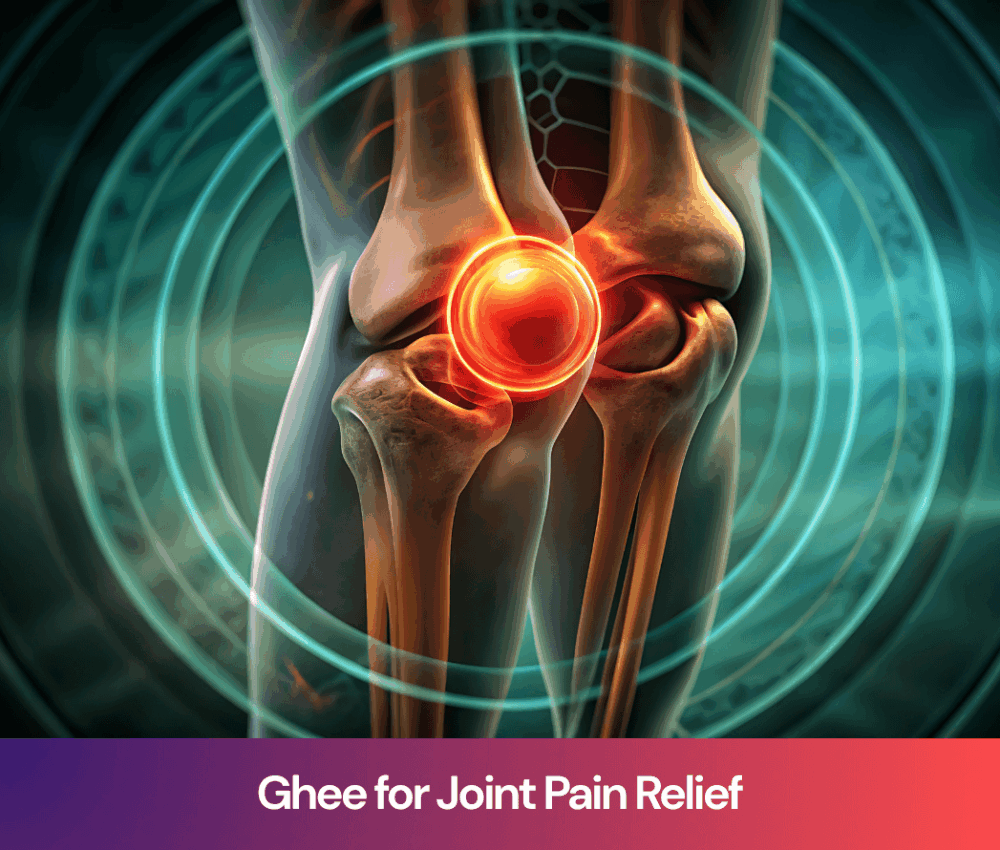
Ghee for Joint Pain Relief: A Natural Ayurvedic Approach That Actually Works
Ghee for Joint Pain supports flexibility and comfort naturally. Learn how ...

Ghee for Joint Pain supports flexibility and comfort naturally. Learn how Murli amrit ghee helps relieve stiffness and nourish joints safely.
Joint pain is no longer just an age-related issue. Long sitting hours, poor posture, repetitive movements, stress, and nutritional gaps are pushing joint discomfort into younger age groups too.
Here’s the problem. Most solutions focus only on suppressing pain, not fixing what’s underneath. Ayurveda looks at joint pain differently. It treats it as a sign of dryness, inflammation, and weakened tissue nourishment.
That’s where Ghee for Joint Pain comes in.
In this article, we’ll explore how ghee supports joint health from the inside and outside, what modern research says about it, how to use it safely, and why Murli amrit ghee fits perfectly into a long-term joint care routine.
Ayurveda links joint pain primarily to Vata imbalance. Vata governs movement, lubrication, and flexibility. When it goes out of balance, joints lose their natural oiliness.
Common signs include:
According to health data, over 30% of adults experience chronic joint pain, and this number rises sharply after age 40. Ayurveda teaches that restoring lubrication and nourishment is key, not just numbing the pain.
Ghee is considered one of the best Vata-pacifying substances because it is:
Let’s break down what makes ghee effective.
Joints need synovial fluid to move smoothly. Dryness reduces this fluid.
Ghee contains butyric acid, a short-chain fatty acid known to reduce inflammation.
Fat-soluble vitamins (A, D, E, K) are crucial for bone and joint strength.
Using Murli amrit ghee, made with traditional methods, ensures these nutrients remain intact and effective.
Ayurveda emphasizes a dual approach.
Massaging warm ghee directly on joints helps:
How to do it:
Consuming ghee strengthens joints internally.
Recommended intake:
A balanced intake supports lubrication at the cellular level, not just surface relief.
Ghee works best when supported by simple habits.
According to studies, people who combine dietary fats with gentle movement report 25–35% improvement in joint flexibility compared to diet-only approaches.
Ghee acts as a foundation, not a standalone fix.
A 52-year-old individual with recurring knee pain and stiffness began using ghee consistently.
Routine included:
After 8 weeks:
This aligns with Ayurvedic principles that joint nourishment takes time but delivers lasting relief when done consistently.
Not all ghee delivers the same results.
For joint care, purity is essential. Murli amrit ghee is:
Processed fats may increase inflammation instead of reducing it. Choosing authentic ghee ensures the body receives nourishment, not stress.
What this really means is simple.
Joint pain isn’t just about wear and tear. It’s about dryness, inflammation, and lack of nourishment. Ghee for Joint Pain works because it restores what joints naturally need.
By combining regular ghee intake, massage, and supportive lifestyle habits, you’re not just managing pain. You’re improving joint resilience over time.
👉 Start your joint care journey with Murli amrit ghee and experience natural relief rooted in Ayurveda.
Yes, when used consistently alongside medical guidance, ghee may reduce stiffness and inflammation.
Most people notice improvements within 4–8 weeks of regular use.
Yes, in moderate amounts, especially when digestion is strong.
Absolutely. Ayurveda recommends ghee for aging joints.
No. It’s beneficial year-round, especially for dry or stiff joints.


