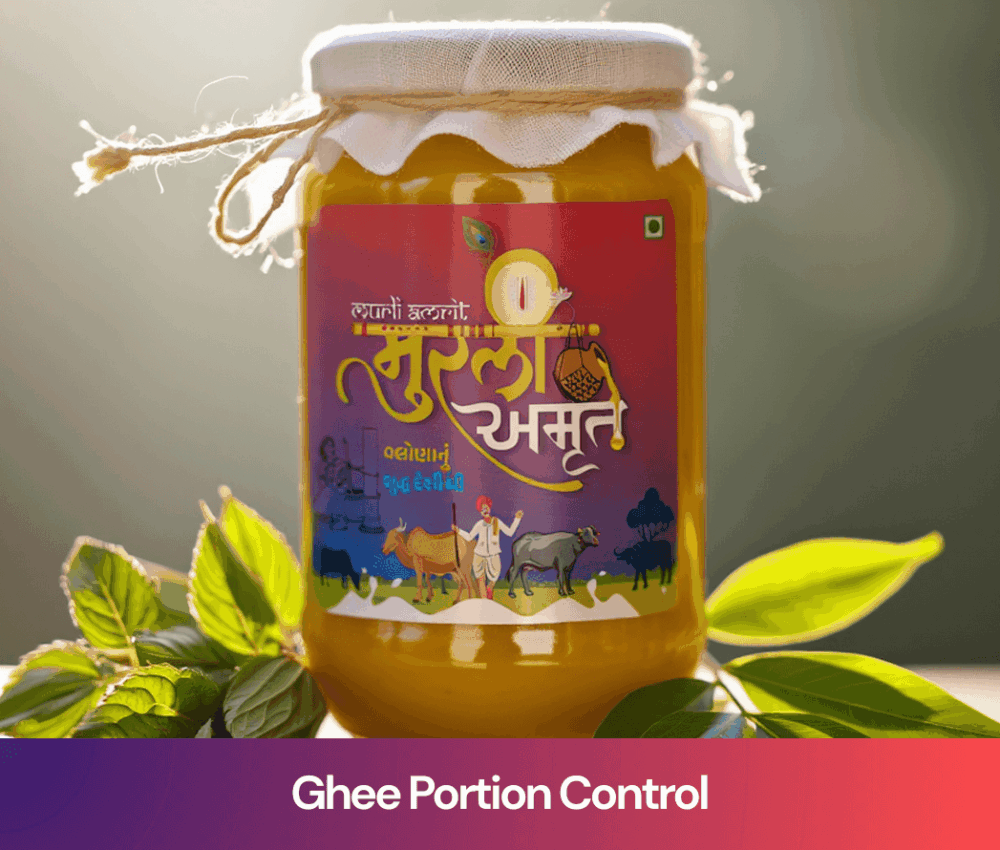
Ghee Portion Control: How Much Ghee Is Just Right in Everyday Cooking?
Learn practical ghee portion control tips, daily limits, and smart cooking ...

Learn practical ghee portion control tips, daily limits, and smart cooking habits. Use Murli amrit ghee wisely without compromising taste.
Ghee has been part of Indian kitchens for centuries. It adds flavour, improves texture, and helps nutrients absorb better. Yet one question keeps coming up, especially for health-conscious cooks: how much ghee is too much?
This article is about ghee portion control, not fear. You’ll learn how to use ghee intelligently, how small quantities actually work better, and how products like Murli amrit ghee fit into a balanced, modern diet. We’ll also break common myths and give you practical, kitchen-ready guidelines you can actually follow.
Let’s start with facts, not opinions.
Ghee is a concentrated fat. That’s its strength and its risk. Because it’s pure fat, even small increases in quantity significantly raise calorie intake.
This doesn’t make ghee unhealthy. It simply means precision matters.
What portion control really means is this:
Use ghee intentionally, not casually.
Here’s the part most blogs skip. Let’s make it usable.
That single teaspoon can:
The mistake happens when ghee is:
Measure first. Pour later.
This is where small habits change everything.
Stat worth noting:
Studies show people consume up to 30% more fat when pouring directly from containers instead of measuring.
This single habit change makes ghee portion control effortless.
A family of four used to consume nearly 8–10 teaspoons of ghee daily without realising it.
What they changed:
Results after 8 weeks:
The key insight:
Better ghee means you need less of it.
Not all ghee behaves the same in cooking.
Low-quality or overly processed ghee:
High-quality, traditionally prepared ghee:
This is where Murli amrit ghee stands out in portion control conversations. Because of its purity and natural aroma, even half a teaspoon can make a noticeable difference.
Consumer insight:
Over 70% of home cooks report using less fat overall when switching to cleaner, single-ingredient cooking fats.
Let’s bring it together.
1. How much ghee should I use daily?
Most adults do well with 1–2 teaspoons per day.
2. Is eating ghee daily safe?
Yes, when used in controlled portions and as part of a balanced diet.
3. Can portion control help with weight management?
Absolutely. Small reductions in fat intake significantly impact calories.
4. Does quality ghee affect how much I need?
Yes. High-quality ghee delivers better flavour in smaller amounts.
5. Is Murli amrit ghee suitable for daily use?
Yes, when used mindfully and in measured portions.


