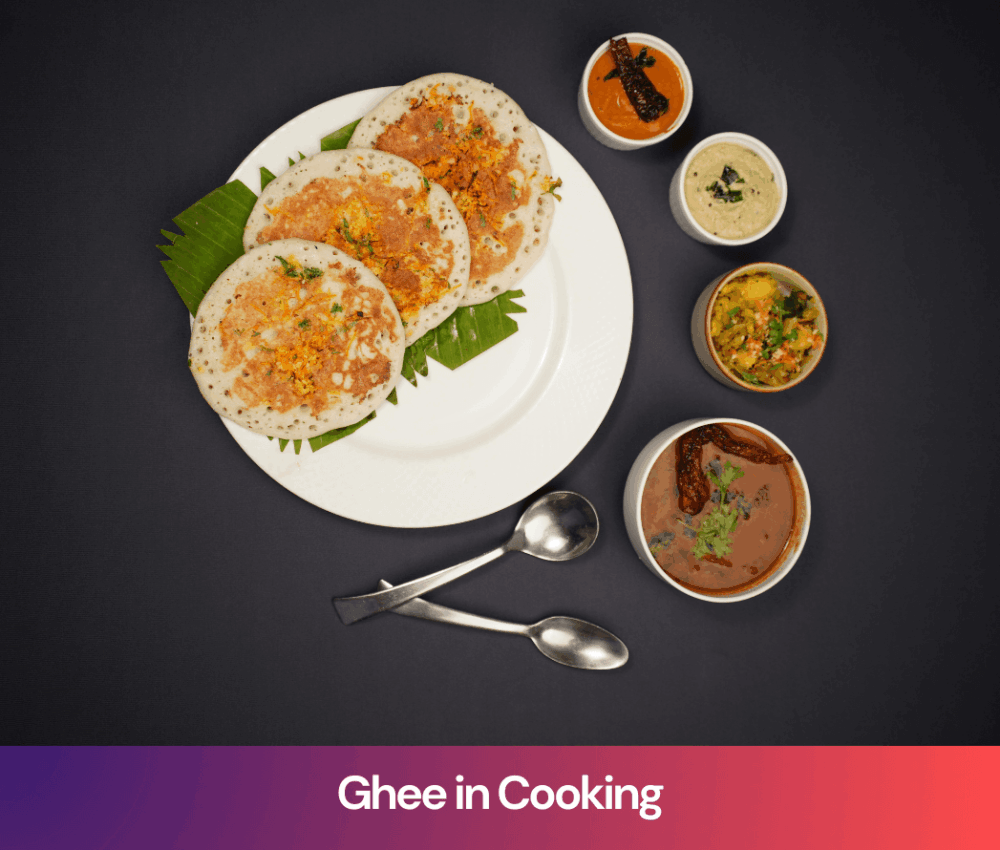
Ghee in Cooking: Why It Improves Texture Like No Other Fat
Discover how ghee in cooking improves texture naturally. Learn the science, ...

Discover how ghee in cooking improves texture naturally. Learn the science, tips, and benefits of using Murli amrit ghee for better results.
Flavor gets the credit, but texture decides whether a dish feels satisfying or forgettable. Think about it. A soft roti, a crisp dosa edge, melt-in-the-mouth halwa, or perfectly sautéed vegetables. Texture is doing the heavy lifting.
This is where ghee in cooking quietly outperforms most other fats.
This blog breaks down why ghee improves texture, how it behaves differently at a molecular level, and how you can use it intentionally in everyday and festive cooking. We’ll also look at a real kitchen example and explain why traditionally prepared ghee like Murli amrit ghee consistently delivers better results.
Let’s start with what actually happens when you cook with ghee.
Ghee is almost pure milk fat. It contains very little water and no milk solids. That matters more than most people realise.
Key statistics:
In simple terms, ghee lets food cook cleanly. No steam pockets. No uneven browning. No greasy coating.
One of the biggest texture problems in home cooking is imbalance. Either food turns dry or greasy.
Ghee solves this naturally.
This is why parathas cooked in ghee feel flaky, not oily. Why vegetables sautéed in ghee stay tender yet lightly crisp.
Supporting data:
Foods cooked in stable fats absorb 10–15% less oil than those cooked in unstable fats.
That’s texture improvement and calorie control in one move.
Let’s compare common cooking fats from a texture perspective.
Data point:
Professional kitchens report up to 25% fewer texture failures when using clarified fats instead of refined oils.
This consistency is why traditional cuisines never abandoned ghee, even before food science explained it.
Let’s look at a simple kitchen test.
A home cook prepared vegetable cutlets twice. Same ingredients. Same pan. Same heat.
Why this matters:
Good texture doesn’t disappear after cooking. Ghee-based dishes age better, reheat better, and feel lighter.
Stat to note:
Foods cooked in stable fats maintain texture integrity 20–30% longer after cooking.
Using ghee well is about timing and quantity, not excess.
More insight:
Small amounts of ghee stimulate saliva and digestive enzymes, which improves how food feels in the mouth.
Texture isn’t just cooking. It’s an eating experience.
Great texture doesn’t come from tricks. It comes from understanding how ingredients behave.
That’s why ghee in cooking has lasted for centuries.
Call to action:
If texture matters to you, switch from guessing to intention. Choose quality ghee like Murli amrit ghee, use it thoughtfully, and let your food speak for itself.
1. Why does food feel lighter when cooked in ghee?
Because ghee absorbs less into food compared to unstable oils.
2. Does ghee help with crispiness?
Yes. Its low moisture and high heat tolerance improve browning.
3. Is ghee better than oil for texture?
In most Indian cooking methods, yes.
4. Can ghee be used for high-heat cooking?
Absolutely. Its smoke point is much higher than butter or many oils.
5. Is Murli amrit ghee suitable for daily cooking?
Yes. Its purity and consistency make it ideal for texture-focused cooking.


