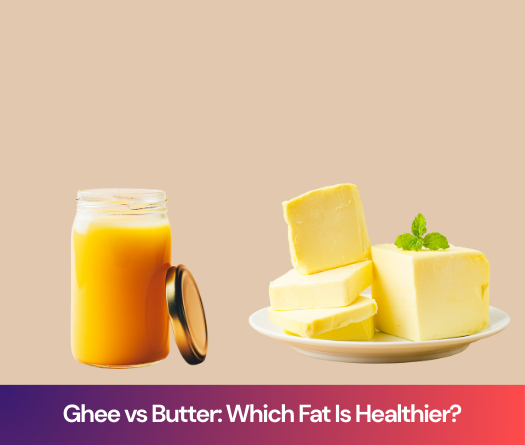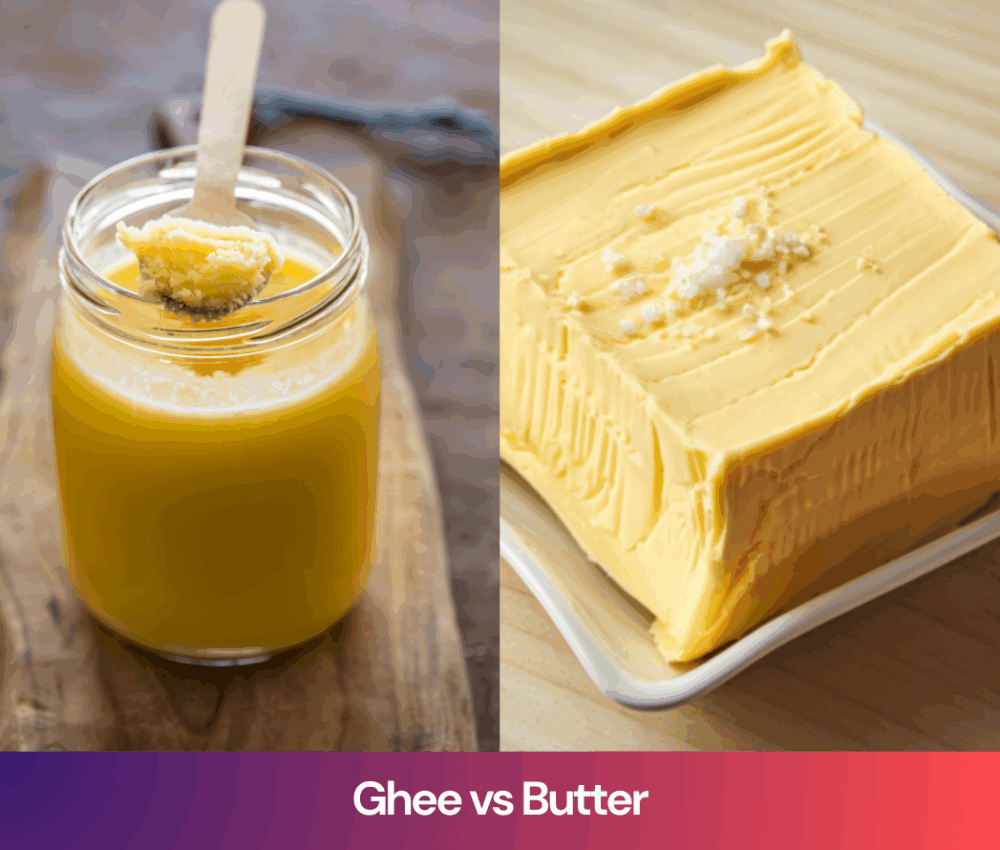
Ghee vs Butter: What Really Works Better for Baking?
Ghee vs Butter in baking explained. Learn how ghee performs, when ...

Ghee vs Butter in baking explained. Learn how ghee performs, when butter works better, and why Murli amrit ghee is gaining popularity.
If you bake even occasionally, you’ve probably asked this at some point. Should I use butter, or can ghee do the job better?
This isn’t just about taste. It’s about texture, aroma, digestion, shelf life, and how your baked goods behave in real kitchens, not test labs. In this blog, we break down Ghee vs Butter for baking, look at how each performs, where one clearly wins over the other, and how traditionally made options like Murli amrit ghee fit into modern baking.
No myths. No overclaims. Just practical clarity.
Let’s start at the foundation.
Butter and ghee come from the same source: milk fat. But what happens next changes everything.
Butter contains:
Ghee is butter that’s been gently simmered to remove:
What’s left is almost pure fat.
Why this matters in baking:
Key stat:
That temperature difference alone explains many baking outcomes.
Texture is where most bakers notice the difference first.
This is why ghee works especially well in:
Baking insight:
If your cookies spread too much with butter, switching to ghee often fixes that without changing the recipe.
Butter has a familiar, mild dairy sweetness. Ghee brings something else entirely.
Ghee develops nutty, caramel-like notes during its preparation. When baked, those notes deepen further.
This is especially noticeable in:
Stat to note:
Using Murli amrit ghee, which follows traditional preparation methods, enhances this natural aroma without artificial flavoring.
Here’s where ghee clearly stands apart.
Butter still contains lactose and milk proteins. Ghee does not.
Nutrition data:
For people baking for families, kids, or older adults, this difference counts.
A home baker running a small eggless bakery switched from butter to ghee in selected recipes.
After three months:
The recipes stayed the same. Only the fat changed.
This is where Ghee vs Butter becomes less theoretical and more practical.
This is the part most people get wrong.
You can’t always do a straight swap by weight.
This approach keeps texture balanced while unlocking ghee’s benefits.
Let’s be fair. Butter still has its place.
Butter works better when:
Think sponge cakes or classic pound cakes.
The smart approach isn’t choosing sides. It’s choosing the right fat for the job.
What this really comes down to is intention.
If you want:
Ghee has the edge.
If you want:
Butter still works.
For bakers exploring healthier, more versatile fats, Murli amrit ghee offers a reliable, traditional option that performs consistently.
Call to action:
Try baking your next batch of cookies or biscuits with ghee. Taste the difference, feel the texture, and decide with experience, not assumption.
1. Can ghee fully replace butter in baking?
In most recipes, yes, with minor adjustments.
2. Does ghee make baked goods greasy?
No, when measured correctly, it improves structure without greasiness.
3. Is ghee healthier than butter?
Ghee is lactose-free and easier to digest for many people.
4. Can I cream ghee like butter?
Yes, but gently. Over-creaming isn’t necessary.
5. Which ghee is best for baking?
Traditionally prepared options like Murli amrit ghee work best.