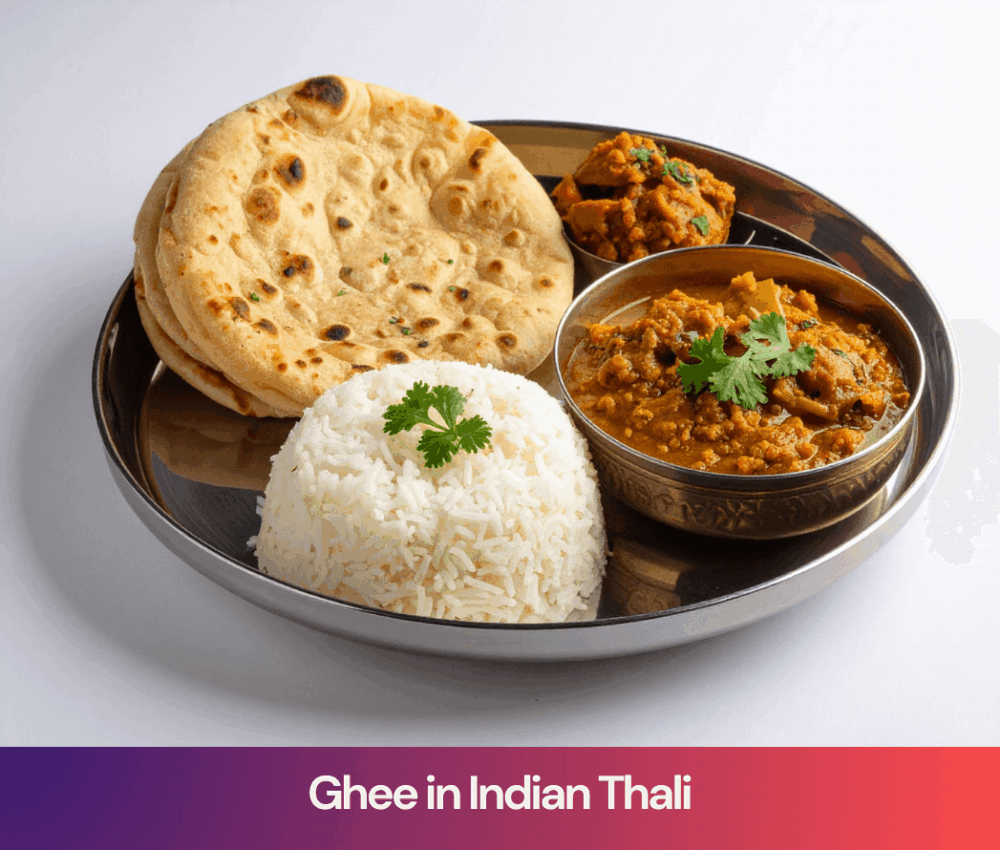
Ghee in Indian Thali: Why This Golden Fat Is Essential to a Complete Meal
Ghee in Indian Thali explained. Learn why Murli amrit ghee is ...

Ghee in Indian Thali explained. Learn why Murli amrit ghee is essential for balance, digestion, and authentic Indian meals.
Look closely at any traditional Indian thali. Rice in the centre. Dal on the side. Sabzi, roti, maybe khichdi or kadhi. And almost always, a spoon of ghee either drizzled, melted, or served separately.
That’s not decoration. It’s design.
This article breaks down why ghee is essential in Indian thalis, not just for taste but for balance, digestion, and nutrition. We’ll explore how ghee works across regions, what science says about it, and how using a quality option like Murli amrit ghee helps recreate the purpose of a traditional thali in modern kitchens.
An Indian thali is built on balance. Different tastes, textures, and nutrients come together on one plate. Ghee plays a quiet but critical role in tying everything together.
Traditionally, ghee is added to:
Why? Because ghee acts as a carrier. It binds dry elements, enhances moisture, and balances strong spices.
According to Ayurvedic food principles, a meal should include fats to support digestion. Ghee is considered one of the most digestible fats when used in moderation.
A few relevant data points:
In short, ghee isn’t extra. It’s functional.
One common concern with thali meals is heaviness. Multiple dishes, grains, lentils, and spices on one plate can feel overwhelming.
This is where ghee comes in.
Ghee stimulates digestive enzymes and helps lubricate the digestive tract. That’s why a spoon of ghee on rice often makes a large meal feel lighter, not heavier.
In practical terms:
A small example from a home kitchen in Gujarat showed that adding one teaspoon of ghee to lunch reduces post-meal bloating compared to meals cooked entirely with refined oil.
Using Murli amrit ghee, which is prepared using traditional methods, ensures the fat remains easy on the stomach and free from harsh processing residues.
Every region in India serves thali differently, but ghee shows up almost everywhere.
North Indian thali
Ghee is used generously with rotis, dal tadka, and rice. It provides warmth and richness, especially in wheat-heavy meals.
South Indian thali
Here, ghee often finishes dishes. A drizzle over pongal or rice enhances aroma without overpowering coconut-based flavours.
Gujarati thali
Ghee balances sweet, spicy, and tangy elements. Even a small amount brings harmony to the plate.
Rajasthani thali
In arid regions, ghee historically provided energy and preservation. Dishes like dal baati rely on it.
Despite regional differences, the purpose remains the same. Ghee adds completeness.
Ever noticed how a thali without ghee feels unfinished?
That’s because fat plays a role in satiety. It signals fullness and satisfaction to the brain.
According to nutrition studies:
Ghee also reduces the need for excessive spices. When flavours bloom naturally, dishes don’t need extra masala or salt.
This is why traditional thalis feel deeply satisfying even when portions are modest.
More is not always better. Traditional wisdom focused on measured use.
General guidelines:
This keeps the meal balanced and digestible.
Ayurvedic texts often recommend 1–2 teaspoons of ghee per meal depending on activity level and climate.
The quality of ghee matters more than quantity. A clean, traditionally prepared ghee like Murli amrit ghee delivers flavour and function without excess heaviness.
The Indian thali isn’t just about variety. It’s about balance. Ghee sits at the centre of that philosophy.
It improves digestion, enhances taste, supports nutrition, and brings emotional comfort to a meal. When used correctly, it doesn’t make food heavy. It makes it complete.
If you want your everyday thalis to feel more traditional, satisfying, and nourishing, start by understanding the role of ghee and choosing a trusted option like Murli amrit ghee.
1. Is ghee mandatory in an Indian thali?
Traditionally, yes. It plays a key role in digestion and balance.
2. Can I skip ghee for weight management?
You can reduce quantity, but completely skipping may reduce satiety and nutrient absorption.
3. Is ghee better than oil for thali meals?
In moderation, ghee offers better flavour and digestive support than refined oils.
4. How much ghee should be added to rice?
Usually half to one teaspoon is sufficient.
5. Why choose Murli amrit ghee for daily thalis?
Its traditional preparation preserves aroma, purity, and digestibility.


