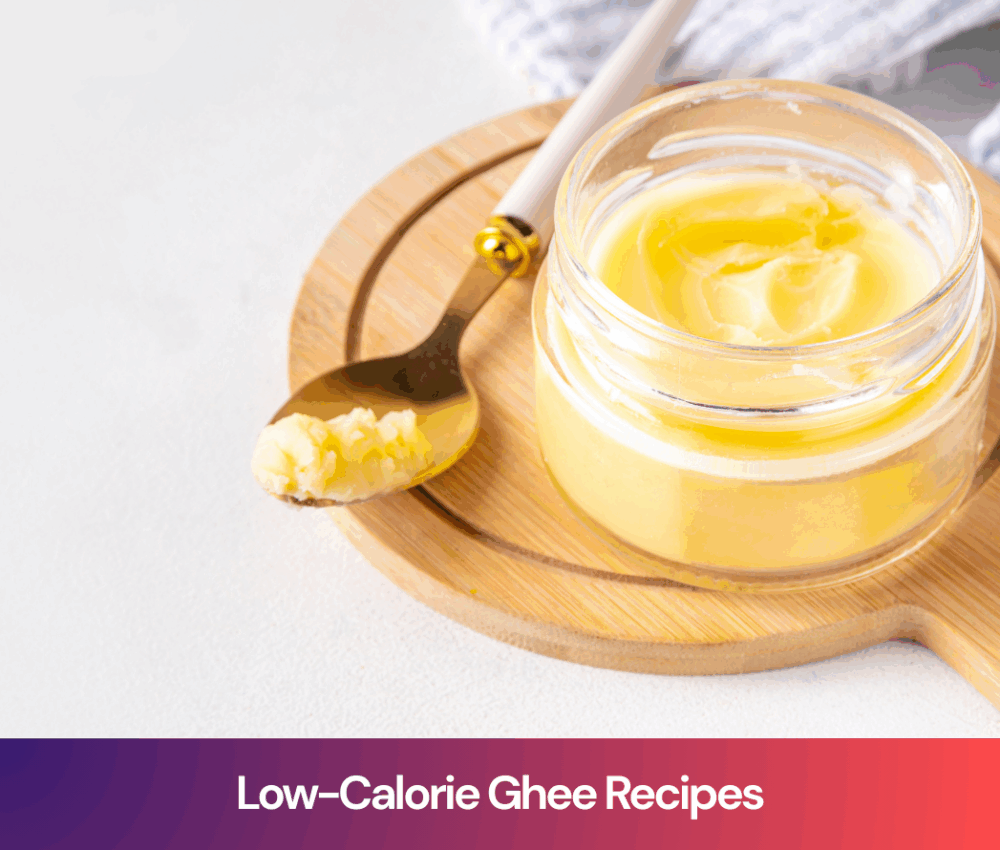
Low-Calorie Ghee Recipes: How to Cook Light Meals Without Giving Up Taste
Discover low-calorie ghee recipes using small portions. Learn smart cooking tips ...

Discover low-calorie ghee recipes using small portions. Learn smart cooking tips with Murli amrit ghee for light, flavourful meals.
If you’re trying to cut calories, ghee is often the first thing people remove from their kitchen. That decision usually backfires. Food starts tasting flat, portions grow bigger to compensate, and cravings creep in.
Here’s the thing.
You don’t need more fat to enjoy food. You need the right amount.
This blog breaks down how to create low-calorie meals using small amounts of ghee, without sacrificing flavour or satisfaction. We’ll talk about smart cooking methods, real numbers, and practical meal ideas, while showing how quality ghee like Murli amrit ghee fits perfectly into a calorie-conscious lifestyle.
First, the numbers. Because clarity matters.
What this means in real life:
A controlled amount of ghee can actually help you eat less overall, because food feels more satisfying.
The problem isn’t ghee.
The problem is using it without measuring.
Fat plays a specific role in cooking. You only need a little to unlock it.
Nutrition insight:
Research published in nutrition journals shows that adding as little as 5–7 grams of fat to a meal improves vitamin absorption, especially vitamins A, D, E, and K.
That’s less than 1½ teaspoons of ghee.
When you use a clean, aromatic ghee like Murli amrit ghee, you naturally stop at smaller quantities because the flavour arrives faster.
This is where theory becomes practice.
Here are meal ideas where ½ to 1 teaspoon of ghee does all the work:
Calorie perspective:
Replacing 2 tablespoons of oil (240 calories) with 1 teaspoon of ghee (45 calories) can cut over 190 calories per meal.
That’s a big win.
A working professional aimed to reduce daily calorie intake by 300 calories without cutting comfort foods.
Changes made:
Results after 6 weeks:
Key takeaway:
Low-calorie eating works better when food still feels complete.
Let’s keep this actionable.
Consumer behaviour data:
People who measure fats consume 25–30% fewer calories from cooking oils over time.
Small habit. Big impact.
Let’s sum it up clearly.
If your goal is sustainable, enjoyable eating, don’t eliminate ghee.
Use it wisely.
1. Can ghee be used in low-calorie cooking?
Yes, when used in small, measured amounts.
2. How much ghee should I use per meal?
Usually ½ to 1 teaspoon is enough.
3. Does ghee increase weight?
Only when consumed in excess. Portion control prevents this.
4. Are low-calorie ghee recipes filling?
Yes. Fat improves satiety, helping you eat less overall.
5. Is Murli amrit ghee suitable for daily low-calorie meals?
Yes, its quality allows better flavour with smaller quantities.


