Murli Amrit Ghee

Free Delivery Over ₹999

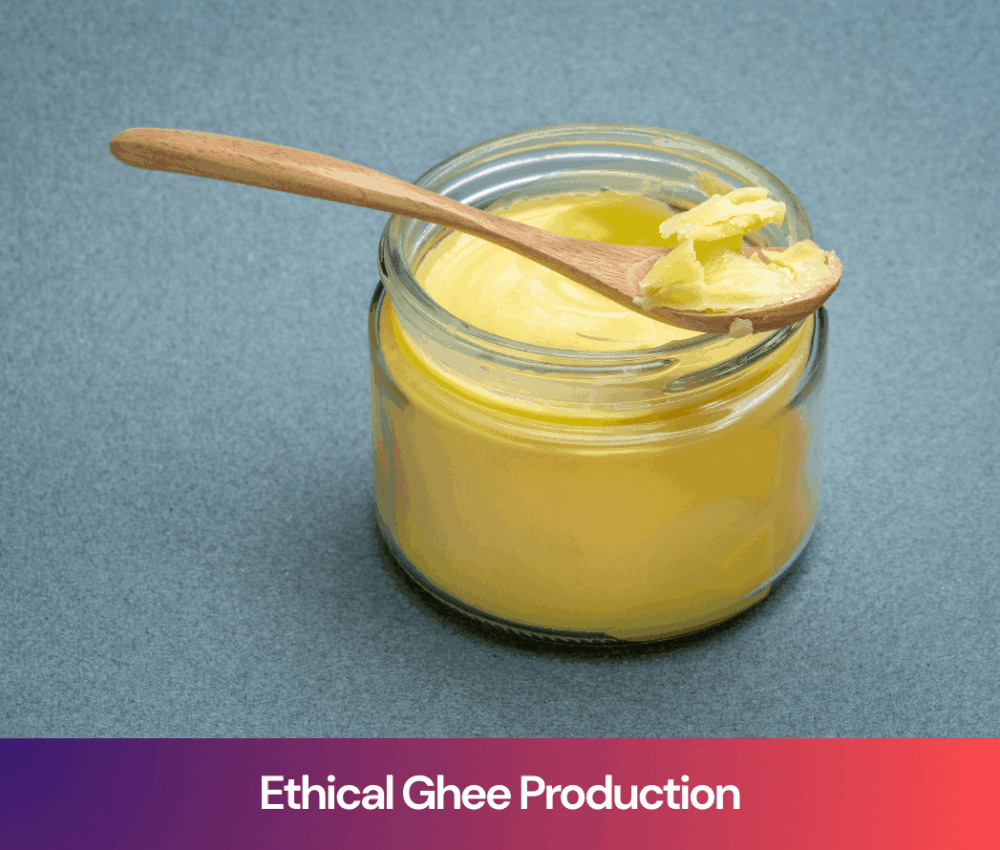
Ethical Ghee Production starts with compassionate cow care. Learn how Murli amrit ghee ensures purity, nutrition, and sustainability from farm to spoon.

Introduction: You Can’t Make Pure Ghee From Unethical Practices

Most conversations around ghee focus on taste, aroma, or lab tests. Very few talk about where it all actually begins.

It begins with the cow.

If the cow is stressed, over-milked, poorly fed, or treated like a machine, the quality of milk changes. And when milk changes, ghee changes too. No processing method can fix that later.

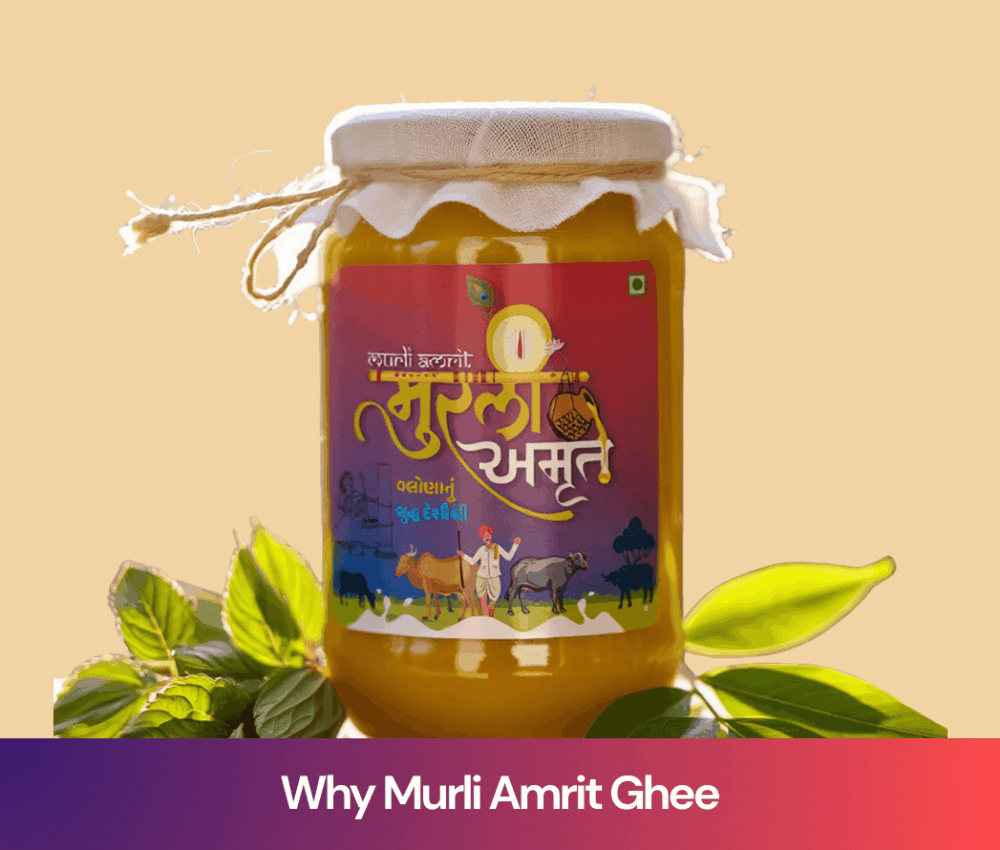
This is why Ethical Ghee Production isn’t a marketing label. It’s a system. A daily commitment. And the reason Murli amrit ghee places cow care at the center of everything it does.

Let’s break down why ethical cow care matters, how it directly affects ghee quality, and what consumers should actually look for.

Why Ethical Cow Care Is the First Step in Ethical Ghee Production

A healthy cow produces better milk. That sounds obvious, but modern dairy systems often ignore it.

Ethical cow care focuses on:

  • Natural feeding cycles
  • Stress-free living
  • Calf-first milk policies
  • No hormonal injections

Science backs this up.

Key data points:

  • Stress hormones in cows reduce milk fat quality by up to 20%
  • Naturally grazed cows produce milk with higher omega-3 content
  • Hormone-free milk shows better fat stability during heating
  • Ethical dairy systems reduce disease incidence by 30–40%

Murli amrit ghee begins with cows that are treated as living beings, not production units.

The Milk Quality Connection: Ethics Directly Affect Nutrition

Milk isn’t just liquid. It’s a biological output influenced by environment, diet, and emotional stress.

Ethically raised cows:

  • Graze on natural fodder
  • Follow seasonal rhythms
  • Are milked gently and less frequently
  • Are not separated abruptly from calves

This results in milk that:

  • Contains healthier fats
  • Has better protein structure
  • Is easier to ferment into curd
  • Produces ghee that feels lighter to digest

In contrast, industrial dairy milk often shows:

  • Altered fat composition
  • Lower CLA levels
  • Reduced micronutrient density

Ethical Ghee Production protects nutrition before the ghee-making process even begins.

Traditional Practices and Cow Welfare Go Hand in Hand

Traditional Indian dairy wisdom never separated cow care from food quality.

In village systems:

  • Cows were fed first
  • Milk was shared with calves
  • Ghee was made in small batches
  • Waste was recycled naturally

Murli amrit ghee follows this same philosophy:

  • No force-milking
  • No chemical feed
  • No artificial milk boosters
  • No overcrowding

This matters because:

  • Calm cows release milk naturally
  • Natural milk ferments better
  • Curd quality improves
  • Bilona ghee yield becomes nutritionally richer

Ethics here isn’t ideology. It’s functionality.

What Ethical Ghee Production Looks Like in Real Life

Let’s look at a practical example.

A small dairy unit shifted from commercial dairy practices to ethical cow care:

  • Reduced milking frequency
  • Allowed calves full access first
  • Switched to local fodder
  • Removed hormonal supplements

Results after 6 months:

  • Milk fat consistency improved
  • Ghee aroma became stronger
  • Digestive complaints reduced among consumers
  • Customer retention increased significantly

No machinery upgrade. No additives. Just better cow care.

This is exactly why Murli amrit ghee invests more in farms than factories.

Environmental Impact: Ethics Extend Beyond the Cow

Ethical Ghee Production isn’t only about animal welfare. It affects the planet too.

Ethical dairy systems:

  • Reduce methane intensity per liter of milk
  • Improve soil fertility through natural grazing
  • Lower water contamination
  • Reduce antibiotic runoff

Some numbers worth noting:

  • Ethical grazing improves soil carbon storage by up to 25%
  • Reduced antibiotic use lowers resistance risk
  • Natural fodder cuts water usage significantly
  • Sustainable dairy models show lower long-term costs

Murli amrit ghee supports systems that nourish land, animals, and people together.

How Consumers Can Identify Ethical Ghee Brands

Labels can be misleading. Instead, look for signs.

Ethical ghee brands usually:

  • Talk openly about cow care
  • Explain their milk sourcing clearly
  • Avoid vague terms like “farm fresh”
  • Emphasize process, not just packaging

Ask these questions:

  • Are calves prioritized?
  • Is milk hormone-free?
  • Is fodder natural and seasonal?
  • Is ghee made in small batches?

Murli amrit ghee answers these questions without hesitation.

Conclusion: Ethical Cow Care Isn’t Optional Anymore

Ethical Ghee Production is not about sentiment. It’s about responsibility.

When cow care is compromised:

  • Nutrition drops
  • Digestion suffers
  • Sustainability fails
  • Trust erodes

Murli amrit ghee proves that when cows are cared for ethically, everything improves. Milk quality. Ghee purity. Human health. Environmental balance.

If you care about what goes into your body, start caring about how it was produced.

Choose ghee that respects life at every step.

FAQs

1. What is Ethical Ghee Production?

It means ghee made from milk sourced through humane, sustainable cow care practices.

2. Does ethical cow care really affect ghee quality?

Yes. It directly influences milk fat, digestion, and nutrient retention.

3. Is ethical ghee more expensive?

Often yes, because it prioritizes quality over volume.

4. Can ethical ghee be used daily?

Absolutely. It’s often better tolerated in small daily amounts.

5. How does Murli amrit ghee ensure ethical sourcing?

By working with farms that follow traditional, calf-first, hormone-free practices.
Checkout
0
    Your Cart
    Your cart is emptyReturn to Shop

    🎉 Wait! Special Discount for You

    We noticed you're about to remove an item from your cart. Here's a 10% OFF coupon for your next purchase!

    SAVE10
    (Click to copy)
    0 item 0
    0