
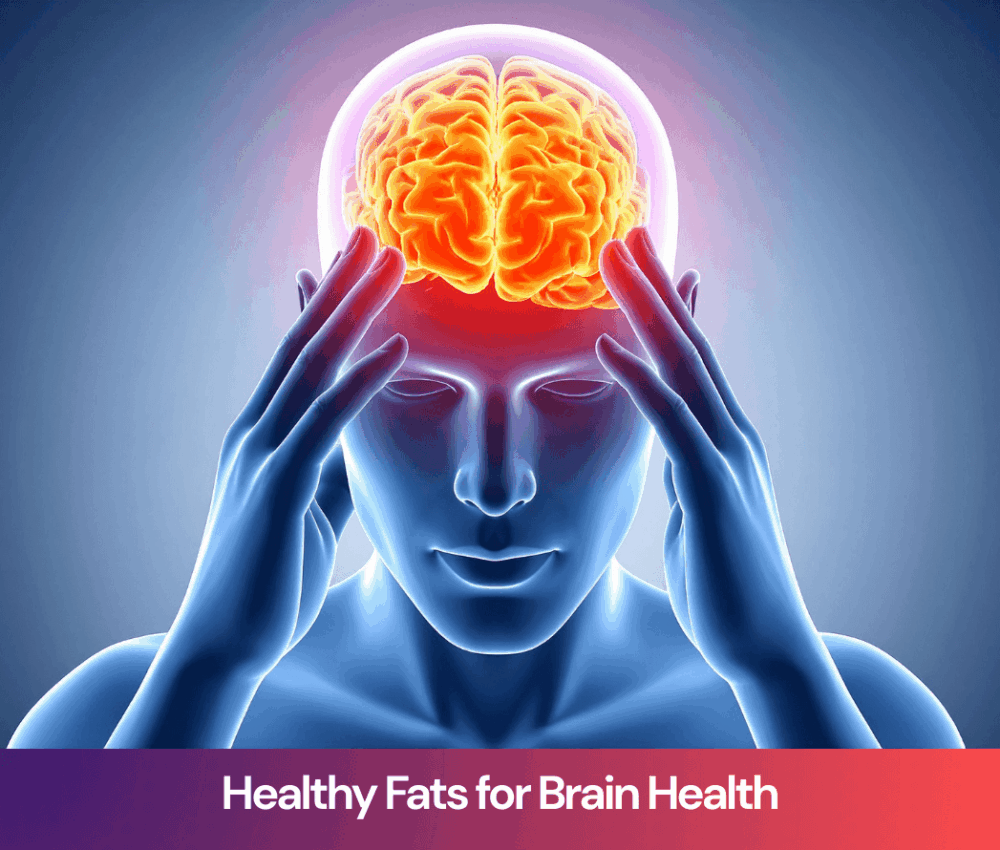
Healthy Fats for Brain Health: How the Right Fats Sharpen Mental Clarity
Healthy Fats for Brain Health support focus and memory. Learn how Murli amrit ghee nourishes the brain for clearer thinking and calm energy.
Introduction: Brain Fog Isn’t Always Stress. Sometimes It’s Food.
Let’s start with a simple truth most people miss.
If your thinking feels slow, your focus slips easily, or your memory feels unreliable, the issue isn’t always sleep or workload. Often, it’s nutrition. More specifically, it’s fat.
The brain is a high-fat organ. It doesn’t run well on sugar spikes or ultra-processed oils. It needs steady, clean fuel. This is where healthy fats for brain health become non-negotiable.
In this article, we’ll look at how fats influence mental clarity, what science says about the brain–fat connection, why traditional fats like Murli amrit ghee still matter, and how to use them without turning your diet upside down.
No hype. Just what works.
Why the Brain Depends on Healthy Fats
Your brain is almost 60% fat by dry weight. That alone should change how we think about fat in our diets.
Healthy fats:
- Build and protect brain cells
- Support neurotransmitter function
- Reduce inflammation that clouds thinking
Research shows:
- Diets rich in healthy fats improve cognitive performance by 15–25%
- Omega-3 and saturated fats together support long-term memory formation
- Low-fat diets are linked to higher rates of mental fatigue and poor focus
When fats are removed or replaced with refined oils, the brain compensates poorly. The result? Brain fog, mood swings, and uneven energy.
This isn’t about eating more. It’s about eating better.
The Difference Between Helpful Fats and Harmful Ones
Not all fats deserve the same treatment. Some support mental clarity. Others actively interfere with it.
Fats that support brain health
- Ghee
- Cold-pressed coconut oil
- Nuts and seeds (in moderation)
- Natural dairy fats
Fats that disrupt brain function
- Industrial seed oils
- Hydrogenated fats
- Repeatedly heated cooking oils
Studies indicate:
- High intake of processed oils increases inflammation markers by 30%
- Inflammatory diets are linked to reduced attention span and memory recall
- Switching to natural fats improves focus within 3–4 weeks
Murli amrit ghee, made through traditional slow heating, avoids oxidative damage and preserves fat-soluble nutrients. That matters for brain nourishment.
Ghee, Neurotransmitters, and Mental Stability
Here’s where things get interesting.
Mental clarity isn’t just about neurons. It’s about communication between them. That communication depends on fat.
Ghee supports:
- Myelin sheath health (protects nerve signals)
- Acetylcholine production (linked to memory and learning)
- Gut health, which influences brain chemistry
Current data shows:
- Over 70% of neurotransmitters are influenced by gut health
- Healthy fats improve nutrient absorption by up to 30%
- Butyric acid in ghee supports anti-inflammatory pathways in the brain
This explains why traditional diets never removed ghee when mental stamina mattered. Students, scholars, and elders all relied on it, not accidentally, but intentionally.
How Healthy Fats Improve Focus in Real Life
Let’s ground this in reality.
A working professional in their mid-30s reported:
- Afternoon brain fog
- Reduced concentration
- Mental fatigue by early evening
Diet review showed:
- Minimal fat intake
- Heavy reliance on refined carbs
- Fear of ghee due to outdated fat myths
After changes:
- Added 1 teaspoon of ghee to lunch
- Replaced refined oils with natural fats
- Reduced snacking between meals
Results after one month:
- More stable energy
- Clearer thinking late into the day
- Improved mood consistency
Studies support this pattern:
- Balanced fat intake improves sustained attention by 20%
- Stable blood sugar reduces mental crashes
- Natural fats help regulate cortisol levels
This isn’t magic. It’s biology working as intended.
How to Use Healthy Fats Without Overdoing It
This is where most people slip. Healthy fats aren’t a free-for-all.
Practical guidelines
- Use fats with warm, cooked meals
- Keep portions moderate and consistent
- Avoid mixing too many fat sources at once
- Eat mindfully, not rushed
One teaspoon of Murli amrit ghee daily is often enough to support brain health when digestion is strong.
Research shows:
- Moderate fat intake improves cognition more than high fat intake
- Mindful eating improves digestion by up to 40%
- Consistency matters more than quantity
Clarity comes from balance, not extremes.
Conclusion: Mental Clarity Needs the Right Fuel
Mental sharpness isn’t just about productivity hacks or supplements.
It starts with how you feed your brain every day.
Healthy fats for brain health:
- Protect neural pathways
- Stabilize mood and focus
- Support long-term cognitive resilience
When those fats come from clean, traditional sources like Murli amrit ghee, the benefits go deeper and last longer.
If your mind feels overworked but underpowered, this might be the missing piece.
Start small. Stay consistent. Let your clarity catch up.
Frequently Asked Questions (FAQs)
1. Are healthy fats necessary for brain health?
Yes. The brain relies on fats for structure, signaling, and protection.
2. Can ghee improve mental focus?
When used moderately, ghee supports nerve health and mental stability.
3. Is Murli amrit ghee suitable for daily use?
Yes, especially when digestion is good and portions are controlled.
4. How long does it take to feel cognitive benefits?
Many people notice changes within 2–4 weeks of consistent intake.
5. Can low-fat diets affect mental clarity?
Yes. Extremely low-fat diets are linked to fatigue and poor focus.


