
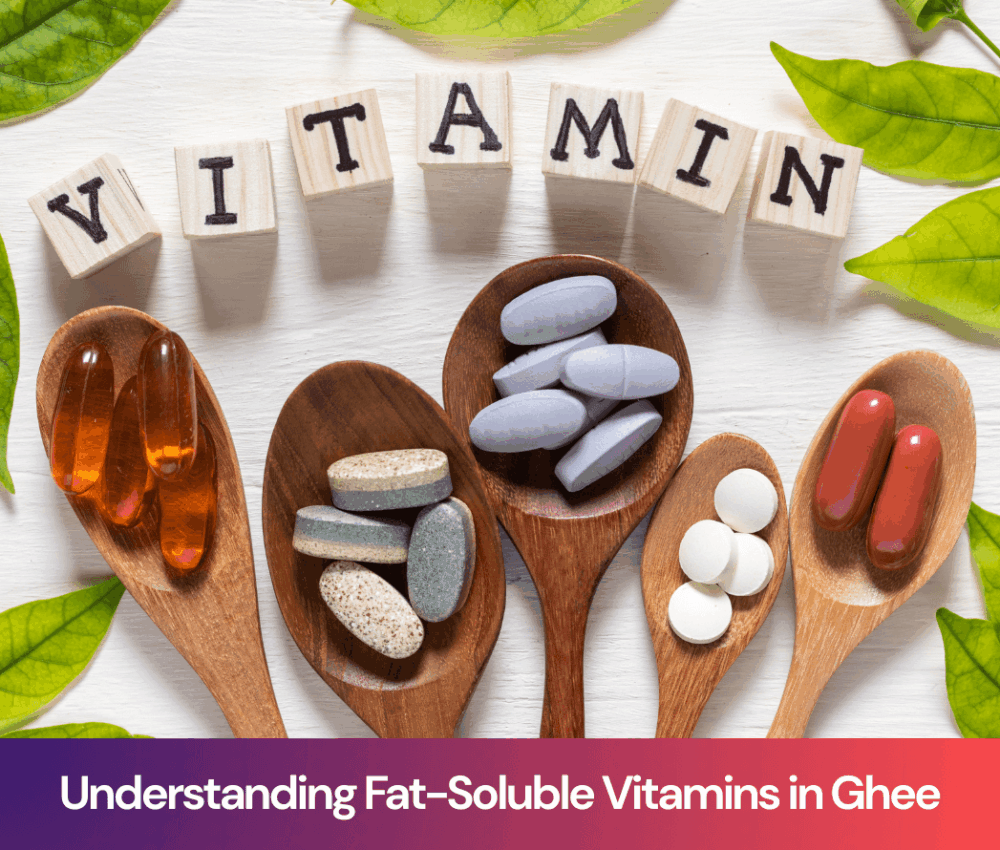
Understanding Fat-Soluble Vitamins in Ghee: Why This Traditional Fat Still Matters
Discover the role of Fat-Soluble Vitamins in Ghee, how they support immunity, bones, and vision, and why Murli amrit ghee delivers them naturally.
Introduction: Why Fat-Soluble Vitamins Deserve More Attention
Vitamins are essential. But here’s what many people miss.
Not all vitamins are absorbed the same way.
Vitamins A, D, E, and K are fat-soluble, which means your body needs fat to absorb and use them properly. This is where traditional foods like ghee quietly do something powerful.
In this article, we’ll break down Fat-Soluble Vitamins in Ghee, explain how they work inside the body, why modern low-fat diets often fall short, and how traditionally prepared options like Murli amrit ghee help bridge that gap naturally.
No hype. Just clarity.
1. What Are Fat-Soluble Vitamins and How Do They Work?
Fat-soluble vitamins dissolve in fat and are stored in the body’s liver and fatty tissues. Unlike water-soluble vitamins, they don’t flush out quickly.
The Four Fat-Soluble Vitamins
- Vitamin A – vision, immunity, skin health
- Vitamin D – bone strength, calcium absorption
- Vitamin E – antioxidant protection
- Vitamin K – blood clotting, bone health
Without enough dietary fat, these vitamins pass through the digestive system without being fully absorbed.
Stat #1: Studies show that consuming vegetables with healthy fats can increase fat-soluble vitamin absorption by 200–400% compared to eating them fat-free.
This explains why traditional diets rarely separate vitamins from fats. Ghee naturally combines both.
2. Fat-Soluble Vitamins in Ghee: What Makes It Unique
Ghee isn’t just a cooking medium. It’s a carrier.
Because ghee is clarified butter, it contains concentrated milk fat along with naturally occurring fat-soluble vitamins, especially when sourced from grass-fed cows.
Nutritional Highlights of Ghee
- Contains vitamins A, D, E, and K in bioavailable form
- Free from lactose and casein when properly prepared
- Stable during cooking, preserving vitamin integrity
Stat #2: Grass-fed ghee can contain up to 2–3 times more vitamin A than grain-fed alternatives.
Traditional products like Murli amrit ghee, made using slow, natural methods, tend to retain these nutrients better than industrial ghee.
3. How Each Fat-Soluble Vitamin in Ghee Supports Your Body
Let’s break this down vitamin by vitamin.
Vitamin A
- Supports night vision and eye health
- Strengthens immune response
- Maintains healthy skin and mucous membranes
Stat #3: Vitamin A deficiency affects over 250 million children globally, leading to vision and immune problems.
Vitamin D
- Helps absorb calcium and phosphorus
- Supports bone density and muscle function
- Plays a role in immune regulation
Stat #4: Nearly 70–90% of Indians are estimated to be vitamin D deficient, despite ample sunlight.
Vitamin E
- Protects cells from oxidative stress
- Supports skin and cardiovascular health
Vitamin K
- Essential for proper blood clotting
- Helps direct calcium into bones instead of arteries
Ghee provides these vitamins in a fat matrix, which improves how efficiently your body actually uses them.
4. Why Modern Diets Struggle With Fat-Soluble Vitamin Absorption
Many people eat enough vegetables but still show deficiencies. Why?
Common reasons include:
- Fear of dietary fat
- Excessive reliance on refined oils
- Skipping traditional fats altogether
Low-fat diets may reduce calorie intake, but they often reduce nutrient absorption too.
Ghee Helps Solve This Problem
- Enhances nutrient uptake from meals
- Improves satiety, reducing overeating
- Supports digestion through butyric acid
Adding even 1 teaspoon of ghee to meals containing vegetables can significantly improve absorption of fat-soluble vitamins.
5. Real-Life Example: Small Change, Measurable Impact
Consider a working professional experiencing fatigue, frequent colds, and joint discomfort despite “eating healthy.
Simple Dietary Change
- Added 1–2 teaspoons of ghee daily to home-cooked meals
- Reduced refined oils
- Maintained overall calorie intake
After a few months:
- Improved energy levels
- Fewer seasonal illnesses
- Better digestion
This wasn’t a supplement. It was better nutrient utilization. That’s the quiet strength of fat-soluble vitamins in ghee.
Conclusion: Why Fat-Soluble Vitamins in Ghee Still Matter Today
Nutrition isn’t just about what you eat. It’s about what your body absorbs.
Fat-Soluble Vitamins in Ghee play a crucial role in immunity, bone health, vision, and cellular protection. When consumed in moderation, ghee acts as both a nutrient source and a delivery system.
Traditionally prepared options like Murli amrit ghee fit naturally into a balanced diet, helping the body get more value from everyday food.
Call to action:
Instead of cutting fat blindly, choose better fats. Let your meals work harder for your health.
Frequently Asked Questions (FAQs)
1. Does ghee really contain fat-soluble vitamins?
Yes. Ghee naturally contains vitamins A, D, E, and K, especially when made from quality milk.
2. Is ghee better than oil for vitamin absorption?
Yes. Ghee improves absorption of fat-soluble vitamins better than refined oils.
3. How much ghee is enough for nutrient absorption?
1–2 teaspoons per day is sufficient for most people.
4. Does cooking destroy vitamins in ghee?
Ghee is heat-stable, which helps preserve vitamins during cooking.
5. Is Murli amrit ghee suitable for daily use?
Yes. When consumed in moderation as part of a balanced diet.


