
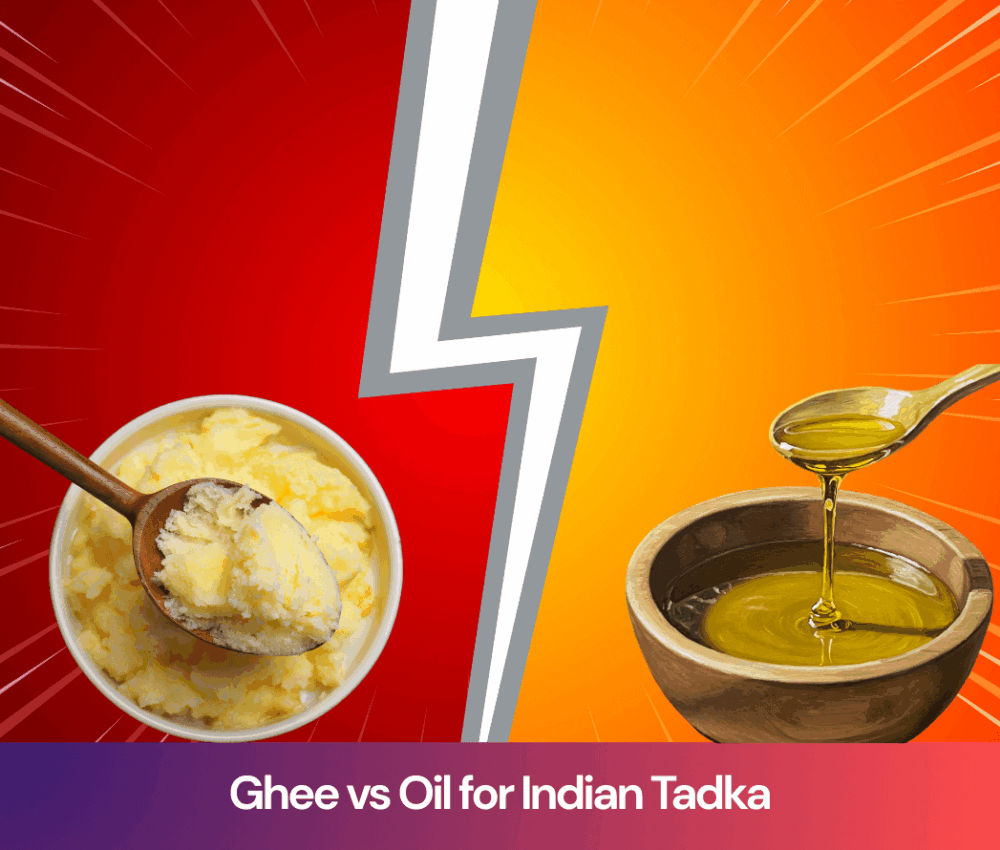
Ghee vs Oil for Indian Tadka: What Really Belongs in Your Pan
Ghee vs Oil for Indian tadka explained with science, taste, and health insights. Learn why Murli amrit ghee stands out in everyday cooking.
Introduction: The Heart of Indian Cooking Starts With Tadka
In Indian kitchens, tadka isn’t optional. It’s the moment when cumin crackles, garlic browns, and the entire dish comes alive. But there’s a quiet debate that shows up at this exact step: ghee vs oil.
Some reach for refined oil out of habit. Others swear by ghee for flavour and digestion. The confusion usually comes from mixed health advice and half-understood nutrition rules.
This article breaks it down clearly. We’ll compare ghee and oil for Indian tadka using science, taste, tradition, and everyday practicality. By the end, you’ll know what actually works best and why traditionally prepared options like Murli amrit ghee still matter.
1. Why Tadka Needs a Stable Cooking Fat
Tadka happens fast. High heat. Direct flame. Whole spices hitting hot fat.
That means the cooking medium must stay stable under sudden temperature spikes.
Ghee performs well here because:
- It has a high smoke point of ~250°C
- It contains minimal moisture
- It doesn’t break down easily when spices hit hot fat
Stat 1: Oils heated beyond their smoke point release free radicals and aldehydes, compounds linked to inflammation and cellular damage.
Many commonly used oils like sunflower and soybean oil have smoke points lower than ghee and oxidize faster during tadka.
This is where the ghee vs oil conversation starts to tilt.
2. Taste and Aroma: Where Ghee Wins Instantly
Tadka isn’t just cooking. It’s flavour engineering.
Ghee carries aroma differently because it’s fat-dense and already clarified. When spices bloom in ghee, they release deeper, rounder flavours.
Oil, on the other hand:
- Acts as a neutral carrier
- Often masks spice aroma
- Can develop a sharp smell if overheated
Anyone who has tasted dal tadka made in ghee versus oil can tell the difference instantly.
Stat 2: Sensory studies show fats with higher saturated content enhance flavour perception more effectively than polyunsaturated oils.
Murli amrit ghee, made using traditional slow-heating methods, retains this aromatic depth without overpowering the dish.
3. Health Perspective: Ghee vs Oil Under Heat
The biggest myth is that oil is automatically healthier.
Here’s the reality.
Refined oils:
- Are highly processed
- Contain unstable polyunsaturated fats
- Oxidize quickly at high heat
Ghee:
- Is mostly saturated fat, which is heat-stable
- Contains butyric acid that supports gut health
- Has fat-soluble vitamins A, D, E, and K
Stat 3: Research shows saturated fats are significantly more resistant to oxidation during high-temperature cooking compared to polyunsaturated fats.
This doesn’t mean unlimited ghee consumption. It means for tadka, where heat matters, ghee is a safer choice.
4. A Practical Kitchen Example: Switching Tadka Fat
Consider a household that prepares dal or sabzi daily.
Before:
- Used refined oil for tadka
- Experienced frequent acidity
- Noticed burnt smell during tempering
After switching to ghee:
- Used smaller quantities
- Spices bloomed faster
- Improved digestion and taste
- No lingering heaviness
Stat 4: Ghee-fed diets in controlled studies show better lipid stability markers compared to repeated-use refined oils.
The key difference wasn’t quantity. It was quality and heat behavior.
Murli amrit ghee, being traditionally prepared, maintains consistency batch after batch, which matters when tadka is daily.
5. When to Use Ghee and When Oil Still Works
This isn’t an all-or-nothing decision.
Here’s a practical way to choose:
Use ghee for:
- Dal tadka
- Khichdi
- Vegetable sabzis
- Temple-style or sattvic cooking
- Low to medium quantity tempering
Use oil for:
- Large-volume cooking
- Neutral flavour requirements
- Regional dishes that traditionally use oil
The mistake isn’t using oil. It’s using unstable oils for high-heat tadka repeatedly.
Understanding ghee vs oil lets you cook smarter, not stricter.
Conclusion: Ghee vs Oil Comes Down to Heat, Taste, and Tradition
Tadka demands stability, aroma, and quick performance. Ghee checks all three.
When compared honestly, ghee outperforms most refined oils in Indian tadka, especially when digestion, flavour, and heat stability matter. Used in moderation and chosen carefully, ghee fits modern nutrition just as well as traditional wisdom.
If tadka is a daily ritual in your kitchen, upgrading to a high-quality option like Murli amrit ghee is a simple shift with long-term benefits.
Cook consciously. Let the fat support the food, not fight it.
Frequently Asked Questions
1. Is ghee better than oil for daily tadka?
Yes, especially due to its heat stability and flavour benefits.
2. Can ghee be used by people watching cholesterol?
Moderate use is generally safe for healthy individuals.
3. Does ghee burn faster than oil?
No. Ghee has a higher smoke point than many oils.
4. Why does tadka taste richer in ghee?
Ghee enhances spice aroma and flavour release.
5. What makes Murli amrit ghee suitable for tadka?
Traditional preparation ensures purity, aroma, and heat resistance.


