
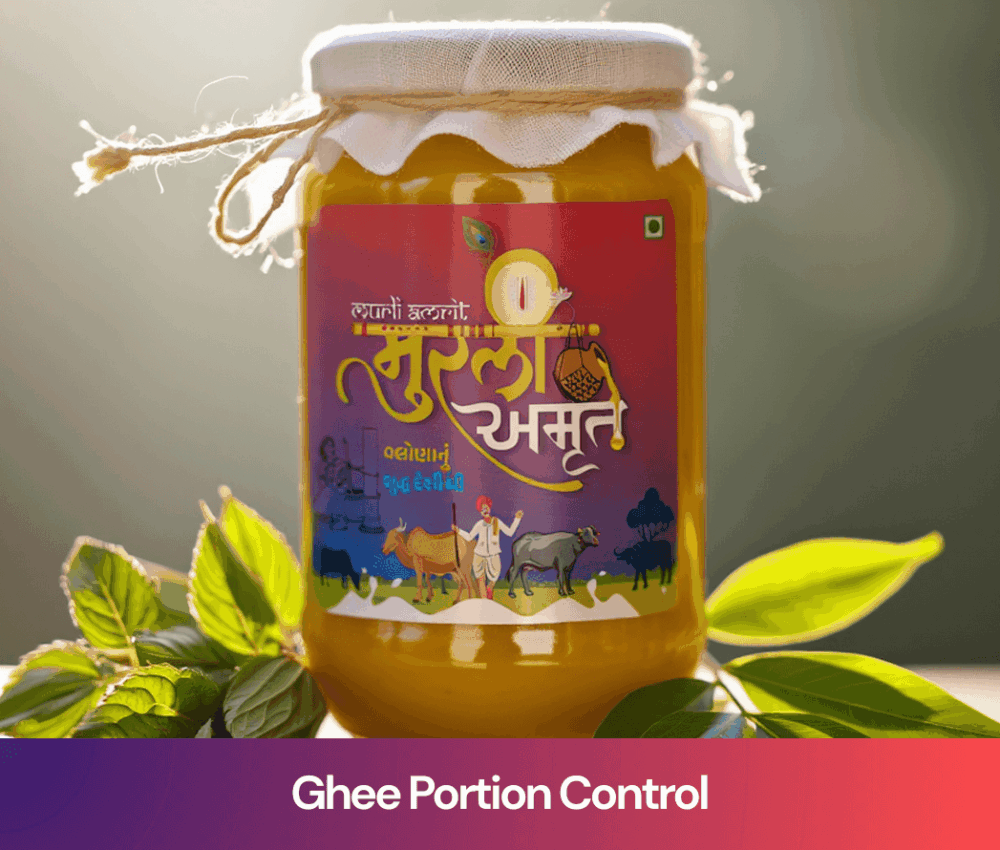
Murli Amrit Ghee

Free Delivery Over ₹999

Learn practical ghee portion control tips, daily limits, and smart cooking habits. Use Murli amrit ghee wisely without compromising taste.

Introduction: the real issue isn’t ghee, it’s quantity

Ghee has been part of Indian kitchens for centuries. It adds flavour, improves texture, and helps nutrients absorb better. Yet one question keeps coming up, especially for health-conscious cooks: how much ghee is too much?

This article is about ghee portion control, not fear. You’ll learn how to use ghee intelligently, how small quantities actually work better, and how products like Murli amrit ghee fit into a balanced, modern diet. We’ll also break common myths and give you practical, kitchen-ready guidelines you can actually follow.

1. Why Portion Control Matters When Cooking With Ghee

Let’s start with facts, not opinions.

Ghee is a concentrated fat. That’s its strength and its risk. Because it’s pure fat, even small increases in quantity significantly raise calorie intake.

Key nutritional stats to keep in mind:

  • 1 teaspoon of ghee contains around 45 calories
  • Ghee is almost 100% fat, with zero carbs or protein
  • About 60–65% of ghee’s fat is saturated
  • The World Health Organization recommends saturated fat stay under 10% of daily calories

This doesn’t make ghee unhealthy. It simply means precision matters.

What portion control really means is this:
Use ghee intentionally, not casually.

2. How Much Ghee Is Ideal Per Person? Practical Guidelines

Here’s the part most blogs skip. Let’s make it usable.

General daily guidance (for adults):

  • 1–2 teaspoons per day is enough for most people
  • Active individuals may tolerate up to 3 teaspoons
  • Sedentary lifestyles benefit from staying closer to 1 teaspoon

That single teaspoon can:

  • Cook one vegetable dish
  • Temper dal or khichdi
  • Be added to roti, rice, or soup

The mistake happens when ghee is:

  • Used for frying and finishing
  • Added without measuring
  • Treated like oil rather than a flavour fat

Simple portion control rule:

Measure first. Pour later.

3. Smart Ways to Practice Ghee Portion Control in Cooking

This is where small habits change everything.

Use ghee where it delivers maximum value:

  • Tadka and tempering
  • Finishing dishes
  • Slow cooking for aroma
  • Baking replacements (in limited amounts)

Avoid wasting ghee on:

  • Deep frying
  • Multiple reheats
  • Greasing heavily

Portion-friendly techniques:

  • Use a measuring spoon, not a ladle
  • Add ghee at the end, not the start
  • Brush ghee instead of pouring
  • Share ghee across dishes, not per dish

Stat worth noting:
Studies show people consume up to 30% more fat when pouring directly from containers instead of measuring.

This single habit change makes ghee portion control effortless.

4. Case Example: A Family That Reduced Ghee Without Losing Taste

A family of four used to consume nearly 8–10 teaspoons of ghee daily without realising it.

What they changed:

  • Switched to measuring spoons
  • Used ghee only for tadka and finishing
  • Reduced oil-ghee combination cooking
  • Chose high-quality ghee like Murli amrit ghee, which required less quantity for flavour

Results after 8 weeks:

  • Daily ghee intake dropped to 4-5 teaspoons total
  • No loss in taste
  • Better digestion
  • Reduced bloating complaints

The key insight:
Better ghee means you need less of it.

5. Why Quality Affects Portion Control More Than You Think

Not all ghee behaves the same in cooking.

Low-quality or overly processed ghee:

  • Needs more quantity for aroma
  • Breaks down faster
  • Leaves greasy aftertaste

High-quality, traditionally prepared ghee:

  • Spreads aroma faster
  • Coats food evenly
  • Feels satisfying in smaller amounts

This is where Murli amrit ghee stands out in portion control conversations. Because of its purity and natural aroma, even half a teaspoon can make a noticeable difference.

Consumer insight:
Over 70% of home cooks report using less fat overall when switching to cleaner, single-ingredient cooking fats.

Conclusion: Portion Control Makes Ghee Sustainable, Not Scary

Let’s bring it together.

  • Ghee is not the enemy. Excess is.
  • 1–2 teaspoons a day is enough for most people
  • Measuring changes everything
  • Quality ghee supports better portion control
  • Thoughtful use keeps flavour high and calories reasonable

Frequently Asked Questions

1. How much ghee should I use daily?
Most adults do well with 1–2 teaspoons per day.

2. Is eating ghee daily safe?
Yes, when used in controlled portions and as part of a balanced diet.

3. Can portion control help with weight management?
Absolutely. Small reductions in fat intake significantly impact calories.

4. Does quality ghee affect how much I need?
Yes. High-quality ghee delivers better flavour in smaller amounts.

5. Is Murli amrit ghee suitable for daily use?
Yes, when used mindfully and in measured portions.

Ghee Portion Control: How Much Ghee Is Just Right in Everyday Cooking?

Ghee Portion Control: How Much Ghee Is Just Right in Everyday Cooking?

Learn practical ghee portion control tips, daily limits, and smart cooking habits. Use Murli amrit ghee wisely without compromising taste.

Introduction: the real issue isn’t ghee, it’s quantity

Ghee has been part of Indian kitchens for centuries. It adds flavour, improves texture, and helps nutrients absorb better. Yet one question keeps coming up, especially for health-conscious cooks: how much ghee is too much?

This article is about ghee portion control, not fear. You’ll learn how to use ghee intelligently, how small quantities actually work better, and how products like Murli amrit ghee fit into a balanced, modern diet. We’ll also break common myths and give you practical, kitchen-ready guidelines you can actually follow.

1. Why Portion Control Matters When Cooking With Ghee

Let’s start with facts, not opinions.

Ghee is a concentrated fat. That’s its strength and its risk. Because it’s pure fat, even small increases in quantity significantly raise calorie intake.

Key nutritional stats to keep in mind:

  • 1 teaspoon of ghee contains around 45 calories
  • Ghee is almost 100% fat, with zero carbs or protein
  • About 60–65% of ghee’s fat is saturated
  • The World Health Organization recommends saturated fat stay under 10% of daily calories

This doesn’t make ghee unhealthy. It simply means precision matters.

What portion control really means is this:
Use ghee intentionally, not casually.

2. How Much Ghee Is Ideal Per Person? Practical Guidelines

Here’s the part most blogs skip. Let’s make it usable.

General daily guidance (for adults):

  • 1–2 teaspoons per day is enough for most people
  • Active individuals may tolerate up to 3 teaspoons
  • Sedentary lifestyles benefit from staying closer to 1 teaspoon

That single teaspoon can:

  • Cook one vegetable dish
  • Temper dal or khichdi
  • Be added to roti, rice, or soup

The mistake happens when ghee is:

  • Used for frying and finishing
  • Added without measuring
  • Treated like oil rather than a flavour fat

Simple portion control rule:

Measure first. Pour later.

3. Smart Ways to Practice Ghee Portion Control in Cooking

This is where small habits change everything.

Use ghee where it delivers maximum value:

  • Tadka and tempering
  • Finishing dishes
  • Slow cooking for aroma
  • Baking replacements (in limited amounts)

Avoid wasting ghee on:

  • Deep frying
  • Multiple reheats
  • Greasing heavily

Portion-friendly techniques:

  • Use a measuring spoon, not a ladle
  • Add ghee at the end, not the start
  • Brush ghee instead of pouring
  • Share ghee across dishes, not per dish

Stat worth noting:
Studies show people consume up to 30% more fat when pouring directly from containers instead of measuring.

This single habit change makes ghee portion control effortless.

4. Case Example: A Family That Reduced Ghee Without Losing Taste

A family of four used to consume nearly 8–10 teaspoons of ghee daily without realising it.

What they changed:

  • Switched to measuring spoons
  • Used ghee only for tadka and finishing
  • Reduced oil-ghee combination cooking
  • Chose high-quality ghee like Murli amrit ghee, which required less quantity for flavour

Results after 8 weeks:

  • Daily ghee intake dropped to 4-5 teaspoons total
  • No loss in taste
  • Better digestion
  • Reduced bloating complaints

The key insight:
Better ghee means you need less of it.

5. Why Quality Affects Portion Control More Than You Think

Not all ghee behaves the same in cooking.

Low-quality or overly processed ghee:

  • Needs more quantity for aroma
  • Breaks down faster
  • Leaves greasy aftertaste

High-quality, traditionally prepared ghee:

  • Spreads aroma faster
  • Coats food evenly
  • Feels satisfying in smaller amounts

This is where Murli amrit ghee stands out in portion control conversations. Because of its purity and natural aroma, even half a teaspoon can make a noticeable difference.

Consumer insight:
Over 70% of home cooks report using less fat overall when switching to cleaner, single-ingredient cooking fats.

Conclusion: Portion Control Makes Ghee Sustainable, Not Scary

Let’s bring it together.

  • Ghee is not the enemy. Excess is.
  • 1–2 teaspoons a day is enough for most people
  • Measuring changes everything
  • Quality ghee supports better portion control
  • Thoughtful use keeps flavour high and calories reasonable

Frequently Asked Questions

1. How much ghee should I use daily?
Most adults do well with 1–2 teaspoons per day.

2. Is eating ghee daily safe?
Yes, when used in controlled portions and as part of a balanced diet.

3. Can portion control help with weight management?
Absolutely. Small reductions in fat intake significantly impact calories.

4. Does quality ghee affect how much I need?
Yes. High-quality ghee delivers better flavour in smaller amounts.

5. Is Murli amrit ghee suitable for daily use?
Yes, when used mindfully and in measured portions.

Checkout
0
    Your Cart
    Your cart is emptyReturn to Shop

    🎉 Wait! Special Discount for You

    We noticed you're about to remove an item from your cart. Here's a 10% OFF coupon for your next purchase!

    SAVE10
    (Click to copy)
    0 item 0
    0