
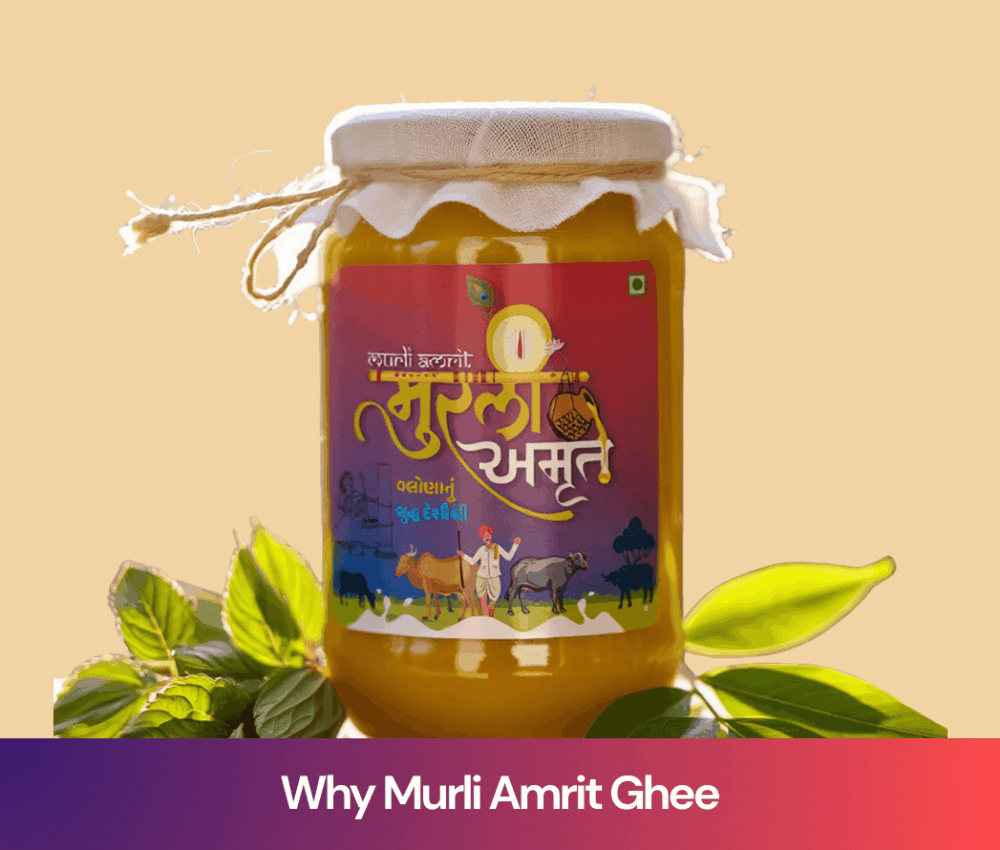
Why Murli Amrit Ghee Still Follows Time-Tested Methods
Discover why Murli amrit ghee follows the Traditional Bilona Ghee method and how slow, natural processes protect purity, digestion, and nutrition.
Introduction: When Speed Increased, Quality Quietly Dropped
Walk into any supermarket today and you’ll see shelves full of ghee. Different brands. Similar claims. Almost identical packaging.
But here’s the thing most people don’t realize.
Not all ghee is made the same way.
Traditional Indian households treated ghee as a sacred food, not a factory product. It was slow-made, seasonal, and deeply connected to digestion and health. Murli amrit ghee continues this philosophy by sticking to the Traditional Bilona Ghee method, even when faster and cheaper alternatives exist.
This blog explains why that choice matters. Not emotionally. Practically. Nutritionally. And long-term.
What Is Traditional Bilona Ghee, Really?
The Bilona method is not just a process. It’s a sequence that respects how milk naturally transforms.
Here’s how it works:
- Fresh cow milk is boiled and cooled
- It’s set into curd using natural culture
- The curd is hand-churned to extract butter
- That butter is slow-heated to make ghee
Each step takes time. And that time changes everything.
Key facts:
- It takes 25–30 liters of milk to make 1 liter of Bilona ghee
- Hand-churning preserves fat structure
- Slow heating protects fat-soluble vitamins
- No cream separation, no chemicals, no shortcuts
This is why Traditional Bilona Ghee costs more and delivers more.
Why Modern Ghee Production Misses the Point
Most commercial ghee today skips crucial steps.
Common industrial shortcuts include:
- Cream separation instead of curd fermentation
- High-temperature heating
- Mechanical extraction
- Deodorization to mask poor aroma
What this really means:
- Loss of natural enzymes
- Reduced butyric acid levels
- Lower digestibility
- Flat taste and artificial aroma
Studies show:
- Fermented dairy fats support gut health up to 40% better than non-fermented fats
- Traditional fats retain higher CLA content
- Overprocessed fats increase oxidative stress markers
- Slow-heated fats maintain vitamin A and E stability
Murli amrit ghee avoids these losses by staying loyal to the Bilona process.
Digestion First: Why Traditional Methods Matter to the Gut
In Ayurveda, ghee is known as samskara anuvartanat. It absorbs the qualities of how it’s prepared.
Traditional Bilona Ghee:
- Stimulates digestive fire
- Lubricates the intestinal lining
- Reduces dryness in the gut
- Supports nutrient absorption
Modern fast-made ghee often feels heavy because it lacks fermented depth.
Butyric acid, a key short-chain fatty acid:
- Supports colon health
- Reduces inflammation
- Improves fat digestion efficiency
Research indicates:
- Butyric acid supports gut lining repair
- Better gut health improves mineral absorption by 30–35%
- Elders digest traditionally fermented fats more easily
This explains why Murli amrit ghee feels lighter even in small quantities.
Nutrition Isn’t Just About Labels. It’s About Process
Two ghees can show identical nutrition labels and still behave very differently inside the body.
Traditional Bilona Ghee retains:
- Natural omega-3 balance
- Vitamin A for immunity
- Vitamin E for cellular protection
- Healthy saturated fats needed for hormone balance
Important data points:
- Traditional ghee contains higher CLA levels, linked to metabolic health
- Vitamin A deficiency affects nearly 30% of Indian adults
- Fat-soluble vitamins absorb better with natural fats
- Traditional fats show better oxidative stability during cooking
Murli amrit ghee protects these nutrients by avoiding excessive heat and chemical interference.
A Real Example: Why Families Switch Back to Traditional Ghee
A nutritionist working with families noticed a pattern. Clients consuming store-bought ghee reported:
- Acidity
- Heaviness after meals
- Reduced appetite regulation
When switched to Traditional Bilona Ghee:
- Digestion improved within weeks
- Portion sizes naturally reduced
- Energy levels stabilized
- Cravings decreased
No diet overhaul. No supplements.
Just a return to method over marketing.
This is why Murli amrit ghee refuses to rush a process that works.
Why Murli Amrit Ghee Chooses Tradition Over Scale
Following traditional methods is harder.
It means:
- Lower production volume
- Higher milk requirement
- Skilled manual labor
- Longer preparation time
But it also means:
- Consistent purity
- Natural aroma
- Better digestion
- Honest nutrition
Murli amrit ghee focuses on:
- Small-batch production
- Traditional churning
- Slow clarification
- No artificial processing
Because some foods are not meant to be industrialized.
Conclusion: Tradition Isn’t Nostalgia. It’s Practical Wisdom
The choice to follow Traditional Bilona Ghee methods isn’t about looking backward. It’s about understanding what the body still needs today.
Murli amrit ghee stands for:
- Digestibility over volume
- Process over shortcuts
- Nourishment over noise
If you care about what your food does after you eat it, tradition is not optional. It’s essential.
Choose ghee that respects your body as much as your plate.
FAQ
1. What makes Traditional Bilona Ghee different from regular ghee?
It’s made from curd-churned butter, not cream, preserving digestion-supporting compounds.
2. Is Murli amrit ghee suitable for daily use?
Yes. In fact, small daily amounts are better absorbed than large quantities of processed ghee.
3. Why does Bilona ghee cost more?
It requires more milk, time, and manual effort. Quality has a real cost.
4. Can people with sensitive digestion consume Bilona ghee?
Yes. Traditional ghee is often better tolerated than commercial fats.
5. Does Traditional Bilona Ghee have a stronger aroma?
Yes. Natural aroma indicates purity and proper preparation.


