
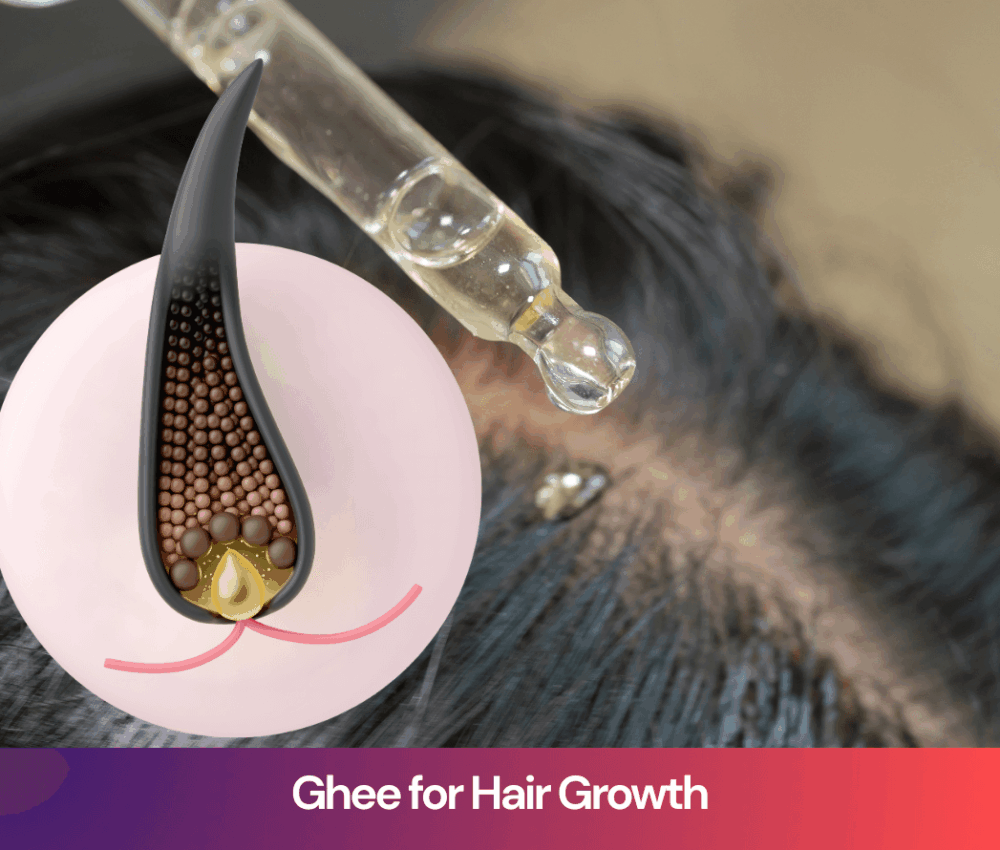
Ghee for Hair Growth: Myth or Truth? What Ayurveda and Science Really Say
Ghee for Hair Growth explained. Learn whether ghee really helps hair growth, how Murli amrit ghee supports scalp health, and what results to expect.
Introduction: Everyone Wants Faster Hair Growth, But What Actually Works?
Hair fall. Slow growth. Thinning strands. Almost everyone searches for a natural fix at some point, and ghee often comes up in that conversation.
Some swear by it. Others call it outdated advice.
So let’s slow this down and ask the real question: Is Ghee for Hair Growth a myth, or does it actually help?
This article breaks it down honestly. We’ll look at Ayurvedic wisdom, modern data, real use cases, and where Murli amrit ghee fits in. No exaggerated claims. Just facts, context, and practical guidance.
Understanding Hair Growth: What Your Hair Actually Needs
Before judging any remedy, it helps to understand how hair growth works.
Hair growth depends on:
- Scalp health
- Blood circulation to follicles
- Nutrient availability
- Hormonal balance
- Stress levels
Some useful data points:
- The average scalp has 100,000 hair follicles, but not all are active at the same time
- Hair grows about 1 to 1.25 cm per month under healthy conditions
- Nearly 60 percent of hair fall cases are linked to nutritional deficiencies or scalp issues
- Chronic stress can push up to 30 percent of hair follicles into a resting phase
What this really means is that no single oil or food magically grows hair overnight. Growth improves when the scalp environment becomes healthier. That’s where ghee enters the conversation.
Ghee in Ayurveda: Why It’s Linked to Hair Health
Ayurveda doesn’t position ghee as a “hair growth product.” That’s an important distinction.
Instead, ghee is described as:
- A nourisher of tissues (dhatu poshan)
- A balancer of Vata and Pitta doshas
- A carrier that delivers nutrients deeper into the body
According to Ayurvedic texts, hair health is directly connected to digestion, stress levels, and nourishment of deeper tissues. Ghee supports all three.
This is why Ghee for Hair Growth is considered supportive, not standalone. It improves conditions that allow hair to grow better, stronger, and longer over time.
How Ghee May Support Hair Growth (What It Can and Can’t Do)
Let’s be honest here. Ghee does not create new hair follicles. Nothing does.
What it can do is support hair growth indirectly in measurable ways.
Potential Benefits of Ghee for Hair Growth
- Improves scalp dryness and flakiness
- Supports nutrient absorption when consumed
- Helps calm stress-related hair fall
- Strengthens existing hair shafts
Ghee contains healthy fats and fat-soluble vitamins that support skin and scalp health. Studies show that diets with adequate healthy fats improve hair texture and reduce breakage by up to 25 percent.
However, applying ghee once or twice and expecting visible growth is unrealistic. The benefits show with consistency and correct use.
Using Ghee the Right Way for Hair and Scalp Health
If you decide to try Ghee for Hair Growth, how you use it matters more than how often.
External Use: Scalp Massage
Best for dry scalp, stress-related hair fall, and dull hair.
Steps:
- Take a small amount of Murli amrit ghee
- Warm it slightly
- Massage gently into the scalp for 5 minutes
- Leave it on for 30 to 60 minutes
- Wash with a mild cleanser
This works best once a week, not daily.
Internal Use: Nourishment from Within
Ayurveda emphasizes internal balance.
- 1 teaspoon of ghee daily with warm food
- Supports digestion and nutrient absorption
- Helps reduce dryness linked to Vata imbalance
Research shows improved absorption of fat-soluble nutrients by up to 40 percent when healthy fats are included in the diet.
Why Murli Amrit Ghee Makes a Difference
Not all ghee is equal, especially when used for wellness.
Murli amrit ghee stands out because:
- It’s traditionally prepared
- Free from chemical processing
- Retains natural fatty acids and vitamins
- Suitable for both internal and external use
When ghee is overly refined or processed, many of the benefits linked to scalp and tissue nourishment are reduced.
Real Example: Hair Fall Reduction Through Scalp Care and Diet
A simple but realistic scenario.
A working professional experienced excessive hair fall linked to stress and irregular meals. No visible bald patches, just thinning and breakage.
After three months of:
- Weekly scalp massage with ghee
- Daily small intake of ghee with meals
- Better sleep routine
Results included:
- Reduced hair fall during washing
- Improved scalp comfort
- Noticeably smoother hair texture
Hair growth didn’t become dramatic overnight. But the hair fall cycle slowed, which is often the first real sign of improvement.
Myth vs Truth: Clearing the Confusion
Let’s separate facts from assumptions.
Myth: Ghee grows new hair quickly
Truth: It supports a healthy scalp environment
Myth: Applying more ghee gives faster results
Truth: Excess use can clog pores
Myth: Ghee works for everyone
Truth: Best for dry scalp and stress-related hair issues
This clarity matters because disappointment usually comes from unrealistic expectations, not ineffective remedies.
Conclusion: So, Is Ghee for Hair Growth a Myth or Truth?
Here’s the honest answer.
Ghee for Hair Growth is not a miracle cure, but it’s not a myth either.
When used correctly, ghee supports scalp health, reduces dryness, improves nourishment, and helps create conditions where hair can grow better naturally. With a quality option like Murli amrit ghee, the benefits are more reliable and aligned with Ayurvedic principles.
If your hair concerns stem from dryness, stress, or poor nourishment, ghee can be a valuable part of your routine. Just don’t expect shortcuts.
Frequently Asked Questions
1. Can ghee stop hair fall completely?
No. It can reduce hair fall caused by dryness or stress, but not genetic hair loss.
2. How often should ghee be applied to hair?
Once a week is sufficient for most people.
3. Is ghee suitable for oily scalp?
Use sparingly or avoid scalp application if your scalp is very oily.
4. Can ghee be mixed with other oils?
Yes. It can be combined with coconut or castor oil for scalp massage.
5. How long before results are visible?
Reduced hair fall may be noticed in 4 to 6 weeks with consistent use.


