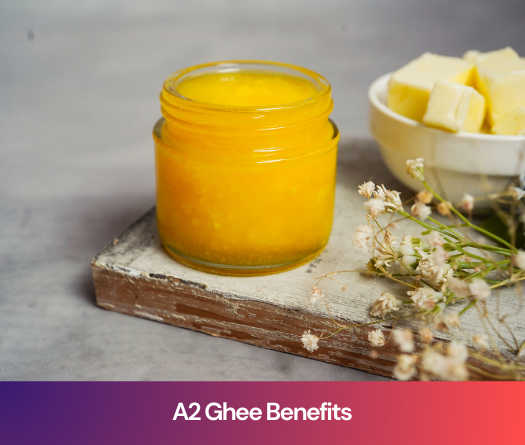
A2 Ghee Benefits: The Timeless Role of A2 Ghee in Indian Diets
Discover A2 ghee benefits and its role in Indian diets. Learn ...

Discover A2 ghee benefits and its role in Indian diets. Learn how Murli amrit ghee supports digestion, immunity, and daily nutrition.
Indian food has always been about balance. Not extremes. Not trends. And definitely not fear of fat.
For centuries, ghee held a central place in Indian kitchens, rituals, and healing practices. Today, as people question oils, digestion issues rise, and lifestyle diseases increase, attention is shifting back to traditional fats, especially A2 ghee.
This article breaks down the real A2 ghee benefits, why it fits naturally into Indian diets, how it supports digestion and metabolism, and why traditionally prepared options like Murli amrit ghee still matter today.
Let’s break it down clearly, without myths or marketing noise.
Not all ghee is the same. The difference starts with the cow.
A2 ghee is made from milk of indigenous Indian cows that produce A2 beta-casein protein, unlike crossbred cows that produce A1 protein.
Why this matters:
Stat 1:
Studies indicate that A1 protein digestion releases BCM-7, a peptide linked to digestive discomfort, while A2 protein does not.
Traditional Indian breeds like Gir cows were always part of the ecosystem. Ghee made from their milk aligned with climate, food habits, and digestion patterns.
That’s why A2 ghee fits Indian diets naturally, not as a trend but as a continuation.
Digestion sits at the center of Indian nutrition philosophy. If digestion is weak, even healthy food causes problems.
A2 ghee supports digestion in multiple ways:
One of the key compounds in ghee is butyric acid, known for maintaining gut integrity.
Stat 2:
Butyric acid has been shown to improve gut lining health and reduce inflammation markers by up to 25% in digestive studies.
This is why A2 ghee is often recommended:
Murli amrit ghee, prepared using traditional methods, retains these gut-friendly compounds better than heavily processed fats.
Indian meals are carb-heavy by design. Rice, roti, lentils. Without the right fat, these meals spike blood sugar and lead to cravings.
A2 ghee balances this.
It:
Fat-soluble vitamins like A, D, E, and K need healthy fat to be absorbed properly.
Stat 3:
Research shows that adding healthy fats improves absorption of fat-soluble nutrients by up to 40%.
This explains why ghee is traditionally added to:
It’s not indulgence. It’s functional nutrition.
Indian diets weren’t designed just for weight control. They were designed for longevity.
A2 ghee supports:
Unlike refined oils, ghee remains stable at high temperatures, making it safer for cooking.
Stat 4:
Ghee has a smoke point of around 250°C, significantly higher than most refined vegetable oils.
This reduces oxidative stress, which is linked to heart disease and chronic inflammation.
When consumed in moderation, A2 ghee supports health without burdening the system.
Consider a family that removed ghee years ago, replacing it with refined oils.
Over time, they notice:
They slowly reintroduce:
Within weeks, common observations include:
This isn’t magic. It’s the body responding to food it recognizes.
Keep it simple and consistent.
Best practices:
Quality matters. Traditionally made ghee like Murli amrit ghee aligns better with these practices than mass-produced alternatives.
A2 ghee isn’t a superfood trend. It’s a return to balance.
Its benefits come from digestibility, stability, and compatibility with Indian meals. When used in moderation, it supports digestion, nutrition, and long-term health.
If you’re rethinking your daily fat choices, A2 ghee deserves a place back on your plate, not out of nostalgia, but because it works.
1. Is A2 ghee suitable for daily use?
Yes, in moderation, it supports digestion and nutrition.
2. Can lactose-intolerant people consume A2 ghee?
Most can, as ghee contains negligible lactose.
3. Is A2 ghee better than refined oil?
Yes, especially for Indian cooking and digestion.
4. How much A2 ghee should I eat daily?
1 to 2 teaspoons is ideal for most adults.
5. Is Murli amrit ghee traditionally prepared?
Yes, it follows traditional methods that preserve nutritional value.


