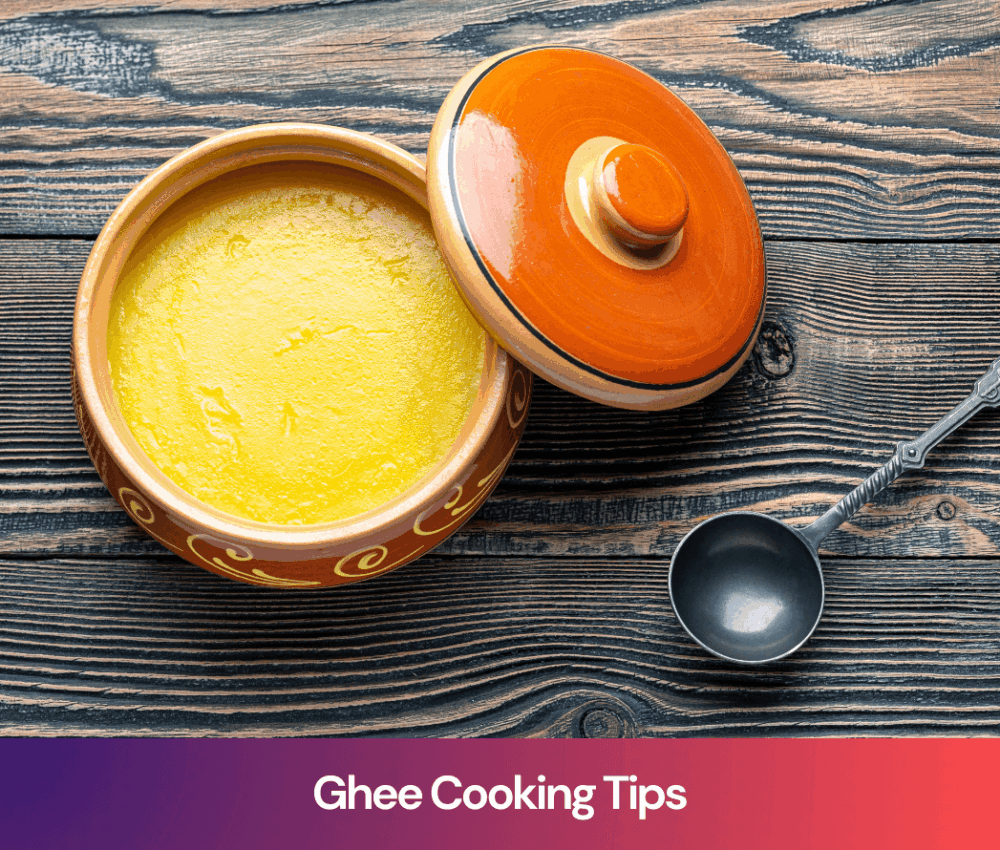
Ghee Cooking Tips: Restaurant-Style Cooking Secrets Using Ghee
Discover restaurant-style ghee cooking tips and learn how Murli amrit ghee ...

Discover restaurant-style ghee cooking tips and learn how Murli amrit ghee enhances flavor, aroma, and texture without heavy spices.
Ever wondered why the same dal, sabzi, or khichdi tastes richer at a restaurant than at home, even when the ingredients look identical? Here’s the thing. It’s rarely about secret masalas. It’s about how fat is used. More specifically, how ghee is used.
Professional kitchens rely heavily on ghee for flavor layering, aroma release, and heat control. This blog breaks down real restaurant-style cooking secrets using ghee, explains the science behind it, and shows how you can apply the same ghee cooking tips at home using Murli amrit ghee, without overcooking or over-spicing your food.
Let’s break it down.
In Indian restaurants, ghee isn’t just a garnish. It’s a foundation.
Pure ghee has a smoke point of around 250°C, higher than most refined oils. This allows chefs to:
Stat: According to food science studies, oils that cross their smoke point form harmful free radicals, while clarified butter remains stable longer.
Ghee dissolves fat-soluble flavor compounds in spices like cumin, cloves, and cardamom more efficiently.
Stat: Research published in food chemistry journals shows fats enhance aroma compound release by up to 30–40% during cooking.
That’s why restaurant gravies taste deeper, not spicier.
One major restaurant secret is timing.
Each stage delivers a different result.
This layered approach is why restaurant food feels rich without being oily.
Stat: Sensory studies show dishes finished with fat score 20% higher on aroma perception than dishes cooked with fat only at the start.
You don’t need commercial burners or heavy quantities. Just better technique.
Many home cooks overheat ghee or reuse it multiple times. Restaurants don’t. Fresh ghee equals clean taste.
Stat: Repeated heating of fats increases oxidation markers by up to 50%, impacting taste and digestion.
Using fresh, small quantities of Murli amrit ghee keeps flavors clean and digestible.
Let’s look at a simple example.
Result:
The ghee version needed fewer spices, tasted fuller, and stayed aromatic longer.
This is why restaurants don’t rely on excess masala. They rely on fat management.
Stat: In blind taste tests, dishes cooked in ghee are preferred by 65–70% participants for aroma and mouthfeel.
Not all ghee behaves the same.
Restaurant kitchens prefer ghee that is:
Poor-quality ghee burns faster and smells heavy.
Murli amrit ghee follows traditional clarification, which means:
That’s exactly what chefs look for.
Stat: Traditional ghee contains short-chain fatty acids like butyrate, which supports gut health and digestion according to nutritional studies.
Restaurant-style cooking isn’t about excess. It’s about precision.
When you use ghee the way chefs do, you:
These ghee cooking tips work best when paired with quality ghee. If you want restaurant-level flavor without restaurant heaviness, start by changing how and when you use ghee.
Try these techniques with Murli amrit ghee and taste the difference in your very next meal.
Yes. Most Indian restaurants use ghee selectively for aroma, tempering, and finishing, not for deep frying everything.
Usually ½ to 1 teaspoon per portion, depending on the recipe.
You can, but balance is key. Many chefs combine oil for volume and ghee for flavor.
Not when used correctly. Small amounts improve digestion and satiety.
Yes. Its purity and traditional preparation make it suitable for everyday meals.


