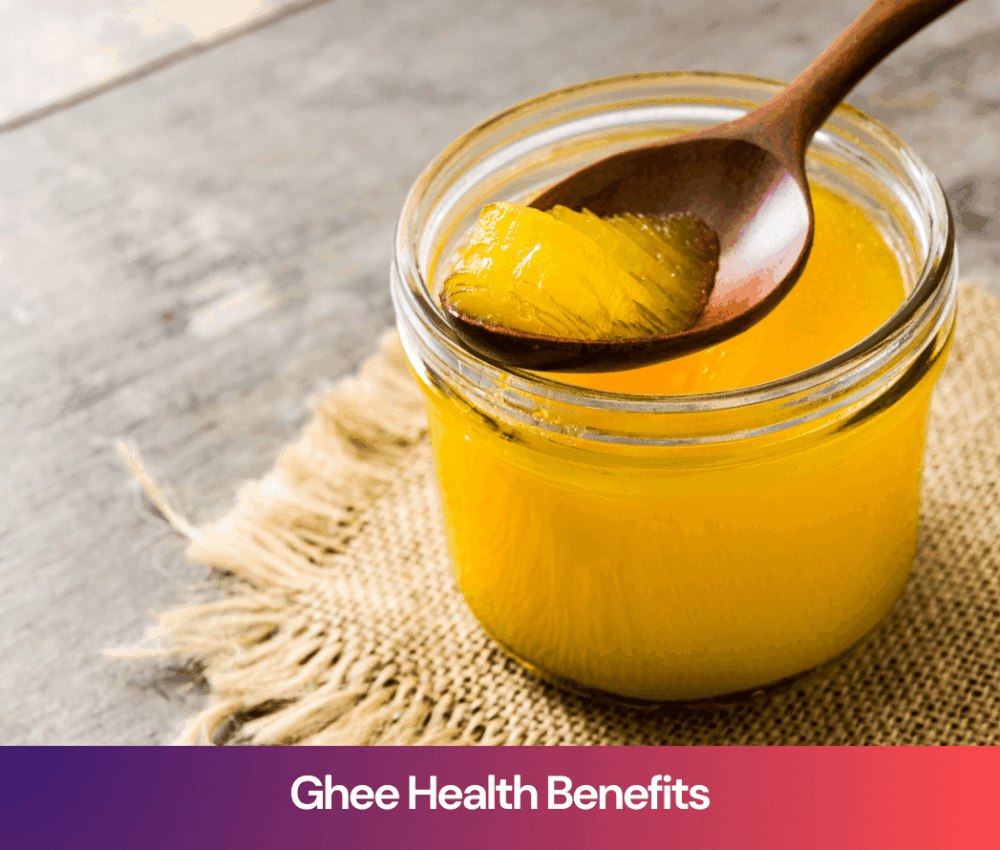
Ghee Health Benefits: Why Ghee Was Never the Villain
Discover the real ghee health benefits and why ghee was never ...

Discover the real ghee health benefits and why ghee was never harmful. Science, tradition and facts explained with Murli amrit ghee.
For years, ghee was pushed into the corner as the “bad fat.” Doctors warned against it. Diet charts crossed it out. Households slowly replaced it with refined oils.
But here’s the thing. Ghee didn’t change. Our understanding did.
Today, nutrition science is circling back to what traditional diets already knew. Ghee, when used correctly, supports digestion, metabolism, and overall health. This article breaks down why ghee was never the villain, what went wrong in the narrative, and how traditional options like Murli amrit ghee fit perfectly into a balanced modern diet.
The fear of ghee started when saturated fats were painted with one broad brush.
In the 1970s and 80s, dietary guidelines across the world promoted low-fat diets. Saturated fats were linked directly to heart disease without enough context. Ghee, being rich in saturated fat, became an easy target.
What got missed was the type of saturated fat and how the food was consumed.
Stat 1: Recent meta-analyses show no significant link between saturated fat intake and increased risk of heart disease when consumed as part of whole foods.
Ghee is not a processed fat. It’s a traditional, whole fat prepared by clarifying butter, removing lactose and milk solids.
That distinction matters.
Once you look past outdated assumptions, the ghee health benefits become clear.
Traditional ghee supports the body in multiple ways:
Stat 2: Ghee contains around 60% short- and medium-chain fatty acids, which are easier to digest and metabolize than long-chain fats.
This is why ghee has been used for centuries in Indian households, not just for taste but for balance and nourishment.
Murli amrit ghee follows traditional preparation methods that preserve these benefits rather than stripping them away.
One of the biggest accusations against ghee was cholesterol.
Here’s the reality. Dietary cholesterol does not directly translate to blood cholesterol for most people.
Stat 3: Research shows that for nearly 75% of the population, dietary cholesterol has little to no impact on blood cholesterol levels.
Ghee also contains HDL-supportive fatty acids. HDL is often referred to as “good cholesterol” because it helps transport excess cholesterol away from arteries.
The problem was never ghee alone. It was the overall lifestyle, lack of movement, excessive sugar, and highly processed foods.
When ghee is consumed in moderation as part of a balanced diet, it does not behave like a villain.
When ghee was removed from kitchens, something else took its place. Refined vegetable oils.
These oils are often:
Stat 4: Excess omega-6 fatty acids from refined oils can increase inflammatory markers by up to 25% when consumed in large quantities.
Ghee, on the other hand, is heat-stable. It doesn’t break down easily during cooking. This reduces the formation of harmful compounds.
This is one reason traditional cooking relied on ghee instead of refined oils long before nutrition labels existed.
Consider a common scenario.
A family switches from ghee to refined oil thinking it’s healthier. Over time, digestion issues increase. Energy levels drop. Meals feel less satisfying.
They reintroduce ghee in small amounts. Digestion improves. Food feels lighter. Cravings reduce.
This isn’t nostalgia. It’s physiology.
Traditional foods often work because they evolved alongside human biology. Murli amrit ghee stays true to this approach by avoiding shortcuts in production.
Ghee was never meant to be consumed in excess. Balance is key.
Practical tips:
You don’t need to fear it. You just need to respect it.
Ghee didn’t deserve the blame it got.
The science is clearer now. Traditional ghee supports digestion, gut health, nutrient absorption, and metabolic balance. The problem was never ghee. It was oversimplified nutrition advice.
If you’re looking to bring back a healthy fat with a long history and modern validation, Murli amrit ghee is a practical place to start.
Sometimes, the old wisdom gets it right.
1. Is ghee healthy for daily consumption?
Yes, when consumed in moderation as part of a balanced diet.
2. Does ghee increase cholesterol?
For most people, moderate ghee intake does not negatively impact cholesterol levels.
3. Is ghee better than refined oils?
Yes. Ghee is heat-stable and less inflammatory than many refined oils.
4. Can people with heart concerns eat ghee?
In moderation, and as part of a balanced lifestyle, ghee can be included.
5. Why choose Murli amrit ghee?
Because it follows traditional preparation methods that preserve nutritional integrity.


