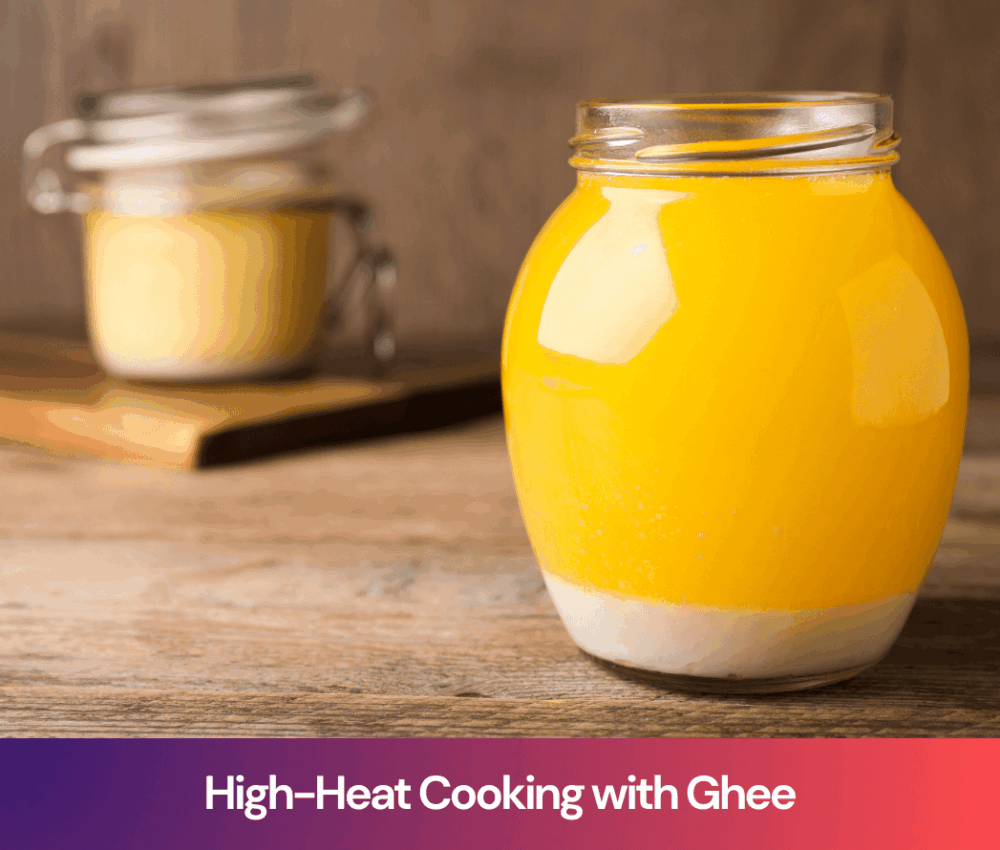
High-Heat Cooking with Ghee: Why It’s the Safest and Smartest Choice
High-Heat Cooking with Ghee explained with science, safety, and taste benefits. ...

High-Heat Cooking with Ghee explained with science, safety, and taste benefits. Learn why Murli amrit ghee is ideal for Indian kitchens.
Here’s the thing. Most cooking mistakes don’t come from ingredients. They come from heat.
Indian cooking regularly crosses temperatures where many oils quietly break down. Frying, tadka, roasting, sautéing. These aren’t gentle methods. Yet we often use fats that simply aren’t built for that stress.
This is where high-heat cooking with ghee stands apart. Traditional ghee has been used for centuries not because it was trendy, but because it worked. It stayed stable. It added flavour. It didn’t turn toxic under heat.
In this article, we’ll break down why ghee handles high temperatures better than most oils, what science says about it, and why traditionally prepared options like Murli amrit ghee still matter today.
When fats are heated beyond their limit, they oxidize. That oxidation produces harmful compounds, off-smells, and bitter tastes.
The key factor here is the smoke point.
Stat 1: Studies show that oils rich in polyunsaturated fats oxidize up to 3 times faster than saturated fats when exposed to high heat.
Ghee is primarily saturated fat, which makes it inherently more stable during intense cooking. This is exactly why high-heat cooking with ghee works so reliably.
Refined oils are often chemically processed. That processing strips away natural antioxidants and leaves behind unstable fat structures.
Ghee, especially traditional ghee:
This means fewer chances of degradation.
Stat 2: Research published in food science journals shows that ghee produces significantly fewer polar compounds under repeated heating compared to sunflower and soybean oil.
Murli amrit ghee follows slow-heating and traditional clarification methods, which helps preserve this structural stability. That matters when the same fat is exposed to high temperatures daily.
The fear around ghee usually comes from outdated fat myths.
What actually matters is what happens to fat when heated.
When oils degrade, they release:
Ghee resists this breakdown.
Stat 3: Butyric acid, which makes up about 3–4% of ghee, has been linked to improved gut lining health and reduced inflammation.
High-heat cooking with ghee isn’t about adding more fat. It’s about choosing a fat that doesn’t turn harmful when stressed.
Let’s look at a simple example. Frying pakoras.
Using refined oil:
Using ghee:
Stat 4: Lab tests comparing food fried in ghee vs vegetable oil show lower lipid oxidation markers in ghee-fried foods.
This isn’t nostalgia. It’s chemistry playing out on a stove.
Ghee works best when used intentionally, not excessively.
Here’s how to get the most out of it:
Best uses for high-heat cooking with ghee:
Murli amrit ghee, because of its consistent quality, performs predictably under these conditions.
Conclusion: High Heat Demands the Right Fat
High-heat cooking isn’t optional in Indian food. It’s built into the cuisine.
The real question is whether your cooking fat supports that heat or quietly works against you.
Ghee doesn’t just survive high temperatures. It thrives in them. It stays stable, enhances flavour, and reduces the formation of harmful compounds when compared to many refined oils.
If you cook daily at high heat, switching to a well-made option like Murli amrit ghee isn’t a luxury. It’s a practical upgrade.
Cook smarter. Let heat work for you, not against you.
1. Is ghee safe for deep frying?
Yes, when used within its smoke point and not reused excessively.
2. Does ghee become toxic at high temperatures?
No, ghee is more heat-stable than most oils.
3. Is high-heat cooking with ghee suitable for daily meals?
Yes, in moderate quantities.
4. Why does ghee smoke less than butter?
Milk solids are removed during clarification.
5. What makes Murli amrit ghee good for high-heat cooking?
Traditional preparation ensures purity and consistent heat performance.


