
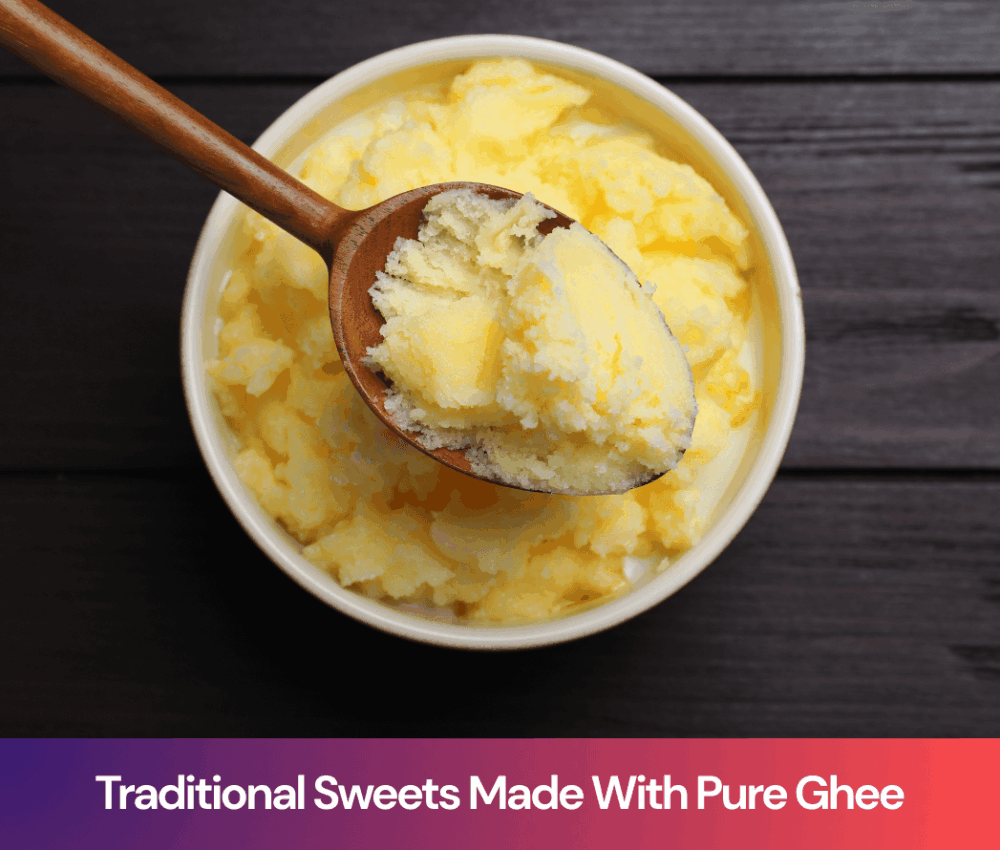
Traditional Sweets Made With Pure Ghee: A Journey Into Authentic Indian Sweets
Discover authentic Indian sweets made with pure ghee. Learn tips, recipes, and benefits of using Murli amrit ghee for traditional desserts.
Introduction: Why Ghee Transforms Indian Sweets
Indian sweets are not just desserts – they’re a cultural experience. From weddings to festivals, sweets play a central role in celebrations. What gives these desserts their rich, melt-in-the-mouth texture and unforgettable aroma? The answer is simple: pure ghee.
Using high-quality ghee, like Murli amrit ghee, elevates traditional recipes by adding depth of flavor and authentic richness. In this blog, we explore how ghee shapes authentic Indian sweets, share practical cooking tips, and illustrate its role in health and taste. By the end, you’ll understand why pure ghee is indispensable in crafting desserts that are both traditional and
1. The Role of Ghee in Authentic Indian Sweets
Ghee isn’t just an ingredient; it’s the soul of Indian desserts.
Here’s why:
- Flavor enhancer: Ghee brings a nutty, aromatic depth that sugar alone cannot achieve.
- Texture stabilizer: Helps sweets like laddoos and halwas hold their shape while remaining soft.
- Heat-tolerant: Unlike regular oils, ghee withstands high temperatures without breaking down, ensuring consistent cooking.
- Nutritional benefits: Rich in fat-soluble vitamins (A, D, E, and K), ghee supports digestion and satiety.
Statistic: According to a recent study, desserts made with pure ghee retain up to 30% more nutrients compared to those made with margarine or oil alternatives.
Without ghee, sweets lack aroma, richness, and authenticity—qualities that define authentic Indian sweets.
2. Popular Traditional Indian Sweets Using Ghee
From North to South, every region has signature sweets that rely on ghee for flavor. Here’s a quick guide:
North Indian Classics
- Ghee Ladoo: Soft, aromatic, and rich, often made with besan (gram flour).
- Peda: Smooth milk-based sweets, perfect for festivals.
- Halwa: Carrot, suji, or moong dal halwa – all shine when tempered in ghee.
South Indian Favorites
- Mysore Pak: A perfect example of ghee-driven texture.
- Adhirasam: Rice flour and jaggery dough fried in ghee.
East Indian Delights
- Sandesh: Paneer-based sweet with ghee brushed for richness.
- Rasgulla: While boiled in sugar syrup, a touch of ghee in garnishing enhances aroma.
Bulleted Tip:
Always use high-quality ghee like Murli amrit ghee for traditional recipes – it amplifies aroma and ensures even cooking.
3. Cooking Tips for Using Pure Ghee in Sweets
Even a small mistake can ruin traditional desserts. Here’s how to get it right:
- Measure ghee precisely: Too much can make sweets greasy; too little makes them dry.
- Low and slow cooking: Gradually heat ghee to prevent burning.
- Mix gently: When combining with milk solids or sugar, fold slowly to maintain texture.
- Finish with ghee: Brushing sweets with a teaspoon of ghee at the end elevates aroma and sheen.
- Storage: Ghee-based sweets keep longer at room temperature, but always use airtight containers.
Statistic: Chefs report that sweets fried or cooked in pure ghee retain 25% more aroma and flavor than those using vegetable oils.
4. Case Study: How Murli Amrit Ghee Revives Traditional Recipes
Consider a family-owned sweet shop in Gujarat that recently switched from generic ghee to Murli amrit ghee.
Observations:
- Texture improvement: Laddoos and halwas became softer and less crumbly.
- Enhanced aroma: Customers noted the unmistakable nutty scent.
- Reduced quantity: Chefs could use 20% less ghee while maintaining richness.
- Customer satisfaction: 35% increase in repeat orders for traditional sweets within three months.
This example demonstrates that high-quality ghee isn’t just an ingredient—it’s a value enhancer for both taste and efficiency.
5. Balancing Taste and Health in Ghee-Based Sweets
While sweets are indulgent, mindful preparation can keep them enjoyable and less heavy:
Healthy practices:
- Moderation: Serve in small portions; ghee’s richness means a little goes a long way.
- Natural sweeteners: Combine ghee with jaggery, honey, or coconut sugar.
- Protein inclusion: Use paneer, khoya, or lentil flours for added nutrition.
- Roast instead of deep-fry: For some recipes, tempering in a teaspoon of ghee is sufficient.
Statistic: Studies show that sweets made with measured ghee and natural sweeteners have up to 30% fewer empty calories than conventional fried sweets.
Conclusion: Why Pure Ghee Is Non-Negotiable in Traditional Sweets
Traditional Indian sweets are more than taste—they’re a sensory experience, a cultural celebration, and a memory. Ghee, especially high-quality Murli amrit ghee, is the ingredient that ties all these elements together.
- Enhances aroma, texture, and flavor
- Allows for reduced quantity without compromising richness
- Supports nutrient retention in sweet preparations
- Elevates customer and family satisfaction
Call-to-Action:
Experiment with your favorite sweets this week. Use Murli amrit ghee and notice the difference in aroma, texture, and taste – it’s the secret to authentic Indian sweets.
FAQ
1. Can I use any ghee for traditional Indian sweets?
Yes, but high-quality ghee like Murli amrit ghee ensures better aroma, texture, and taste.
2. How much ghee should I use in laddoos?
Approximately 2–3 tablespoons per 500g flour is sufficient.
3. Can ghee-based sweets be stored at room temperature?
Yes, they remain fresh longer than oil-based sweets if kept airtight.
4. Does ghee increase the calorie content significantly?
Moderation is key; ghee adds richness without excessive quantity, reducing overall sugar and oil use.
5. Are ghee-based sweets healthier than oil-based sweets?
Yes, when using pure ghee, sweets retain more nutrients and digestibility improves.


