
Murli Amrit Ghee

Free Delivery Over ₹999

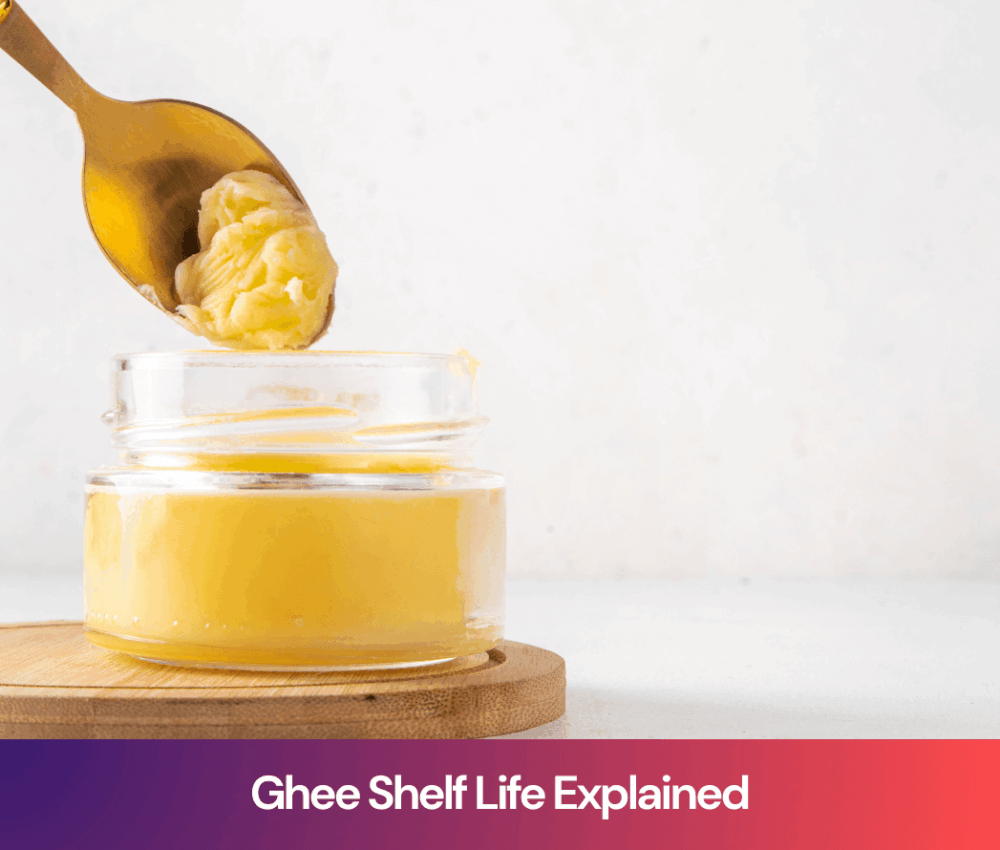
Ghee Shelf Life explained: learn why ghee stays fresh naturally for months, how it resists spoilage, and why Murli amrit ghee lasts longer.

Introduction: Why Does Ghee Never Seem to Spoil?

If you’ve ever noticed that ghee can sit in your kitchen for months without refrigeration, you’re not imagining things. This isn’t luck. It’s food science, tradition, and smart processing working together.

While most fats go rancid quickly, ghee behaves differently. No mold. No sour smell. No sudden spoilage. That’s why Indian households have trusted it for generations, even before modern storage methods existed.

This article breaks down why ghee has a long shelf life naturally, without preservatives or refrigeration. We’ll explore the science behind Ghee Shelf Life, the role of moisture removal, fat stability, traditional preparation methods, and why quality ghee like Murli amrit ghee stays fresh longer.

Let’s understand what makes ghee one of the most stable natural fats.

1. The Science Behind Ghee’s Long Shelf Life

The biggest reason ghee lasts so long is simple: it removes what bacteria need to survive.

During the ghee-making process:

  • Water is evaporated
  • Milk solids are removed
  • Only pure milk fat remains

Why This Matters

Microorganisms need moisture and sugars to grow. Ghee contains neither.

Stat to note:
Freshly prepared ghee contains less than 0.1 percent moisture, compared to butter, which contains around 15–18 percent water.

With almost no water content, bacteria, yeast, and mold have nothing to feed on. That alone dramatically extends shelf life.

This is the foundation of ghee’s natural preservation.

2. Removal of Milk Solids: A Key Preservation Step

Butter spoils faster because it still contains:

  • Lactose (milk sugar)
  • Casein (milk protein)

These components oxidize and ferment over time.

Ghee removes both.

What Happens During Clarification

  • Milk solids separate and are strained out
  • Lactose is eliminated
  • Proteins that cause spoilage are gone

Stat to note:
Ghee is virtually lactose- and casein-free, making it far more stable than butter or cream-based fats.

This also explains why ghee:

  • Smells neutral even after months
  • Doesn’t sour
  • Is suitable for people with dairy sensitivity

Shelf life and digestibility go hand in hand here.

3. High Saturated Fat Content = Natural Stability

Not all fats behave the same way when exposed to air, heat, or time.

Unsaturated fats oxidize faster. Saturated fats are more stable.

Ghee contains a high proportion of saturated fats.

Fat Composition of Ghee

  • Saturated fats: ~60–65 percent
  • Monounsaturated fats: ~25–30 percent
  • Polyunsaturated fats: ~5 percent

Stat to note:
Oils high in polyunsaturated fats oxidize up to 10 times faster than saturated fats under heat and light exposure.

This is why many seed oils require antioxidants or preservatives, while ghee does not.

The fat structure itself protects ghee from rapid degradation.

4. Traditional Preparation Methods Increase Shelf Life

How ghee is made matters as much as what it’s made from.

Traditional methods involve:

  • Slow heating
  • Curd-based butter
  • Longer simmering time

This process reduces residual moisture even further.

Example: Traditional vs Industrial Ghee

A dairy study comparing:

  • Industrial, high-heat ghee
  • Slow-cooked, bilona-style ghee

Found that traditional ghee:

  • Had lower moisture content
  • Showed slower oxidation rates
  • Maintained aroma and color longer

This is why traditionally prepared ghee like Murli amrit ghee often lasts longer without refrigeration compared to mass-produced alternatives.

Process equals preservation.

5. Real-Life Storage Example: How Ghee Stays Fresh for Months

Let’s look at a practical household example.

Case Example

A family stores:

  • One jar of ghee at room temperature
  • One jar of refined oil

After 6 months:

  • Ghee retains aroma and color
  • Oil develops a stale smell and darker hue

Why?

Because ghee resists:

  • Oxidation
  • Microbial growth
  • Moisture absorption

Stat to note:
Properly stored ghee can last 9–12 months at room temperature and over 18 months when refrigerated, without preservatives.

This makes ghee one of the most shelf-stable natural fats available.

How to Maximize Ghee Shelf Life at Home

Even though ghee is naturally stable, poor handling can reduce its lifespan.

Follow these simple practices:

  • Always use a dry spoon
  • Keep the lid tightly closed
  • Store away from direct sunlight
  • Avoid introducing water or food crumbs
  • Use glass or food-grade steel containers

What Shortens Ghee Shelf Life

  • Moisture contamination
  • Repeated exposure to steam
  • Low-quality raw material

Ghee doesn’t spoil easily, but it still deserves basic care.

Conclusion: Why Ghee’s Shelf Life Is Naturally Impressive

Ghee’s long shelf life is not accidental. It’s the result of:

  • Near-zero moisture
  • Removal of milk solids
  • Stable fat composition
  • Traditional slow-cooking methods

Unlike many modern foods, ghee doesn’t rely on additives or refrigeration to stay fresh. When prepared and stored correctly, it remains safe, aromatic, and usable for months.

If shelf stability matters to you, choosing a well-prepared option like Murli amrit ghee ensures you get both nutrition and longevity.

Call to action:
Store ghee smartly, choose quality over shortcuts, and let tradition handle preservation the natural way.

Frequently Asked Questions (FAQs)

1. Does ghee need refrigeration?

No. Ghee can be stored safely at room temperature if kept dry and sealed.

2. How long does ghee last naturally?

Typically 9–12 months at room temperature and up to 18 months refrigerated.

3. Can ghee go bad?

Yes, if contaminated with water or food particles. Signs include mold or sour odor.

4. Why doesn’t ghee spoil like butter?

Because ghee removes water, lactose, and proteins that promote spoilage.

5. Is longer shelf life a sign of preservatives?

No. Pure ghee stays stable naturally without preservatives.

Ghee Shelf Life Explained: Why Ghee Lasts So Long Naturally

Ghee Shelf Life Explained: Why Ghee Lasts So Long Naturally

Ghee Shelf Life explained: learn why ghee stays fresh naturally for months, how it resists spoilage, and why Murli amrit ghee lasts longer.

Introduction: Why Does Ghee Never Seem to Spoil?

If you’ve ever noticed that ghee can sit in your kitchen for months without refrigeration, you’re not imagining things. This isn’t luck. It’s food science, tradition, and smart processing working together.

While most fats go rancid quickly, ghee behaves differently. No mold. No sour smell. No sudden spoilage. That’s why Indian households have trusted it for generations, even before modern storage methods existed.

This article breaks down why ghee has a long shelf life naturally, without preservatives or refrigeration. We’ll explore the science behind Ghee Shelf Life, the role of moisture removal, fat stability, traditional preparation methods, and why quality ghee like Murli amrit ghee stays fresh longer.

Let’s understand what makes ghee one of the most stable natural fats.

1. The Science Behind Ghee’s Long Shelf Life

The biggest reason ghee lasts so long is simple: it removes what bacteria need to survive.

During the ghee-making process:

  • Water is evaporated
  • Milk solids are removed
  • Only pure milk fat remains

Why This Matters

Microorganisms need moisture and sugars to grow. Ghee contains neither.

Stat to note:
Freshly prepared ghee contains less than 0.1 percent moisture, compared to butter, which contains around 15–18 percent water.

With almost no water content, bacteria, yeast, and mold have nothing to feed on. That alone dramatically extends shelf life.

This is the foundation of ghee’s natural preservation.

2. Removal of Milk Solids: A Key Preservation Step

Butter spoils faster because it still contains:

  • Lactose (milk sugar)
  • Casein (milk protein)

These components oxidize and ferment over time.

Ghee removes both.

What Happens During Clarification

  • Milk solids separate and are strained out
  • Lactose is eliminated
  • Proteins that cause spoilage are gone

Stat to note:
Ghee is virtually lactose- and casein-free, making it far more stable than butter or cream-based fats.

This also explains why ghee:

  • Smells neutral even after months
  • Doesn’t sour
  • Is suitable for people with dairy sensitivity

Shelf life and digestibility go hand in hand here.

3. High Saturated Fat Content = Natural Stability

Not all fats behave the same way when exposed to air, heat, or time.

Unsaturated fats oxidize faster. Saturated fats are more stable.

Ghee contains a high proportion of saturated fats.

Fat Composition of Ghee

  • Saturated fats: ~60–65 percent
  • Monounsaturated fats: ~25–30 percent
  • Polyunsaturated fats: ~5 percent

Stat to note:
Oils high in polyunsaturated fats oxidize up to 10 times faster than saturated fats under heat and light exposure.

This is why many seed oils require antioxidants or preservatives, while ghee does not.

The fat structure itself protects ghee from rapid degradation.

4. Traditional Preparation Methods Increase Shelf Life

How ghee is made matters as much as what it’s made from.

Traditional methods involve:

  • Slow heating
  • Curd-based butter
  • Longer simmering time

This process reduces residual moisture even further.

Example: Traditional vs Industrial Ghee

A dairy study comparing:

  • Industrial, high-heat ghee
  • Slow-cooked, bilona-style ghee

Found that traditional ghee:

  • Had lower moisture content
  • Showed slower oxidation rates
  • Maintained aroma and color longer

This is why traditionally prepared ghee like Murli amrit ghee often lasts longer without refrigeration compared to mass-produced alternatives.

Process equals preservation.

5. Real-Life Storage Example: How Ghee Stays Fresh for Months

Let’s look at a practical household example.

Case Example

A family stores:

  • One jar of ghee at room temperature
  • One jar of refined oil

After 6 months:

  • Ghee retains aroma and color
  • Oil develops a stale smell and darker hue

Why?

Because ghee resists:

  • Oxidation
  • Microbial growth
  • Moisture absorption

Stat to note:
Properly stored ghee can last 9–12 months at room temperature and over 18 months when refrigerated, without preservatives.

This makes ghee one of the most shelf-stable natural fats available.

How to Maximize Ghee Shelf Life at Home

Even though ghee is naturally stable, poor handling can reduce its lifespan.

Follow these simple practices:

  • Always use a dry spoon
  • Keep the lid tightly closed
  • Store away from direct sunlight
  • Avoid introducing water or food crumbs
  • Use glass or food-grade steel containers

What Shortens Ghee Shelf Life

  • Moisture contamination
  • Repeated exposure to steam
  • Low-quality raw material

Ghee doesn’t spoil easily, but it still deserves basic care.

Conclusion: Why Ghee’s Shelf Life Is Naturally Impressive

Ghee’s long shelf life is not accidental. It’s the result of:

  • Near-zero moisture
  • Removal of milk solids
  • Stable fat composition
  • Traditional slow-cooking methods

Unlike many modern foods, ghee doesn’t rely on additives or refrigeration to stay fresh. When prepared and stored correctly, it remains safe, aromatic, and usable for months.

If shelf stability matters to you, choosing a well-prepared option like Murli amrit ghee ensures you get both nutrition and longevity.

Call to action:
Store ghee smartly, choose quality over shortcuts, and let tradition handle preservation the natural way.

Frequently Asked Questions (FAQs)

1. Does ghee need refrigeration?

No. Ghee can be stored safely at room temperature if kept dry and sealed.

2. How long does ghee last naturally?

Typically 9–12 months at room temperature and up to 18 months refrigerated.

3. Can ghee go bad?

Yes, if contaminated with water or food particles. Signs include mold or sour odor.

4. Why doesn’t ghee spoil like butter?

Because ghee removes water, lactose, and proteins that promote spoilage.

5. Is longer shelf life a sign of preservatives?

No. Pure ghee stays stable naturally without preservatives.

Checkout
0
    Your Cart
    Your cart is emptyReturn to Shop

    🎉 Wait! Special Discount for You

    We noticed you're about to remove an item from your cart. Here's a 10% OFF coupon for your next purchase!

    SAVE10
    (Click to copy)
    0 item 0
    0