Sattvic Food Essentials: Ghee for Fasting and Religious Cooking
Sattvic Food made pure with ghee. Learn why ghee is essential ...

Sattvic Food made pure with ghee. Learn why ghee is essential for fasting and religious cooking and how Murli amrit ghee supports health and tradition.
Here’s the thing. Fasting and religious cooking in India has never been just about skipping meals or following rules. It’s about purity, balance, and feeding the body in a way that supports the mind and spirit.
That’s where ghee comes in.
For centuries, ghee has been a core ingredient in Sattvic food, used during vrat, pooja, and temple cooking. From lighting diyas to preparing prasad, ghee is seen as both nourishment and offering. In this blog, we’ll break down why ghee is essential during fasting and religious cooking, how it aligns with Sattvic principles, and why Murli amrit ghee fits naturally into this tradition.
Let’s break it down.
Sattvic food is rooted in Ayurveda and yogic philosophy. It focuses on foods that are pure, light, and nourishing. The goal is simple: keep the body energized without disturbing mental clarity.
Ghee checks every box.
According to Ayurvedic texts, ghee enhances ojas, the subtle energy responsible for immunity and vitality. This is one reason it’s preferred over refined oils during fasting and religious cooking.
Key stat:
That balance is crucial during fasting, when the body is already under stress.
Fasting isn’t about weakness. It’s about controlled nourishment. Ghee plays a smart role here.
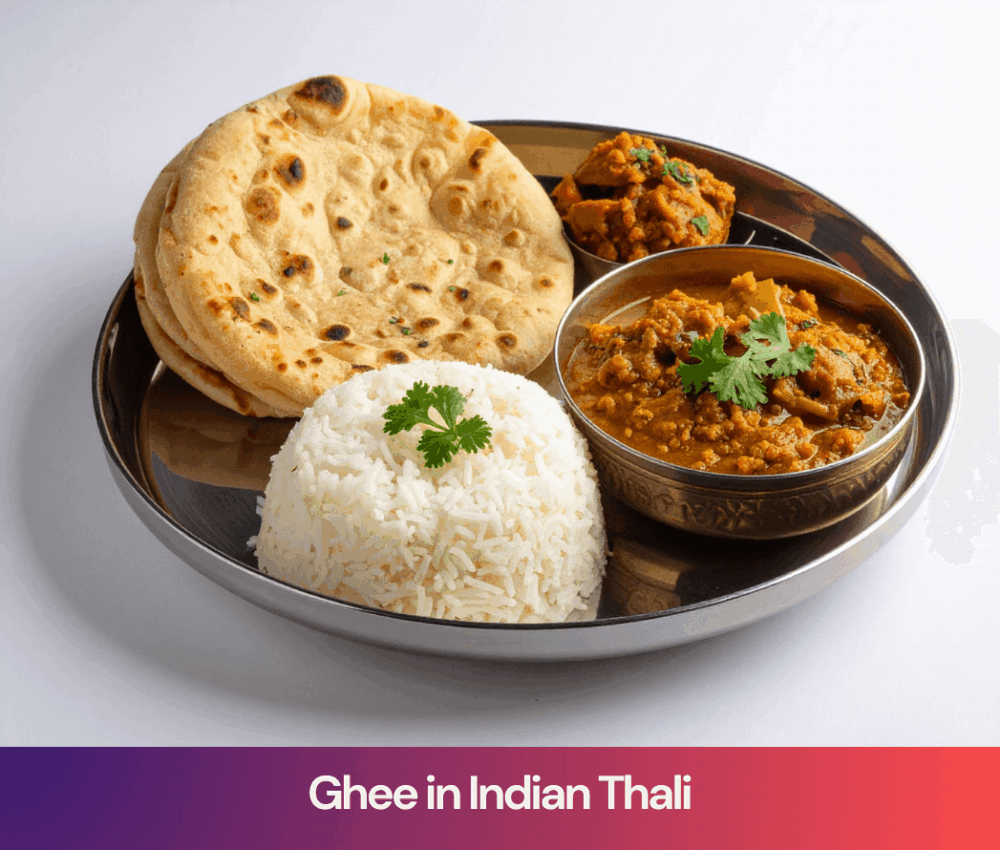
Unlike refined oils, ghee has a high smoke point (around 250°C), making it safe for cooking vrat foods like sabudana khichdi, singhare ke atte ke pakode, and roasted makhana.
Relevant data:
This is why many people feel more energetic when vrat meals are cooked in ghee rather than oil.
In temples and homes alike, ghee is more than an ingredient. It’s symbolic.
In many traditions, prasad cooked in ghee is believed to carry satvik energy, making it spiritually uplifting as well as nourishing.
Example:
At major temples like Tirupati and Shirdi, ghee is still used in large-scale prasad preparation. This isn’t accidental. It’s rooted in tradition, digestibility, and sanctity.
Using Murli amrit ghee, which is prepared using traditional methods, aligns naturally with these rituals.
Let’s talk about the benefits. Not marketing talk. Real, practical ones.
Current statistics:
During fasting, when meals are limited, nutrient absorption becomes even more important. Ghee helps maximize what your body gets from simple vrat foods.
Not all ghee is the same. This matters more than people realize.
Murli amrit ghee stands out here because it stays close to traditional preparation standards. That makes it suitable for both health-conscious fasting and religious use.
These small choices make fasting meals more nourishing and aligned with Sattvic values.
A home kitchen in Gujarat switched from refined oil to ghee for Navratri fasting meals. The result?
This shift wasn’t about eating more. It was about eating smarter.
What this really means is simple.
Ghee isn’t outdated. It’s timeless.
In fasting and religious cooking, ghee supports digestion, energy, and spiritual intention. As a core element of Sattvic food, it respects both the body and tradition. Choosing a quality option like Murli amrit ghee ensures you stay true to these principles without compromise.
If you’re fasting, cooking prasad, or preparing vrat meals, rethink the oil. Go back to ghee. Your body and your rituals will thank you.
1. Is ghee allowed in all types of fasting?
Yes, ghee is widely accepted in most Indian fasting traditions due to its purity and digestibility.
2. Can ghee be used instead of oil for vrat cooking?
Absolutely. Ghee is often preferred because it’s easier to digest and keeps you full longer.
3. Is ghee considered Sattvic?
Yes. Ghee is classified as a Sattvic fat in Ayurveda.
4. How much ghee is ideal during fasting?
Moderation is key. 1–2 teaspoons per meal is generally sufficient.
5. Why choose Murli amrit ghee for religious cooking?
Because it aligns with traditional preparation methods and maintains purity without additives.