Ghee Smoke Point Explained: Why It Matters for Healthy Cooking
Learn about the ghee smoke point, why it matters for safe ...

Learn about the ghee smoke point, why it matters for safe cooking, and how Murli amrit ghee supports high-heat Indian cooking naturally.
Most people focus on calories, fat percentage, or labels when choosing cooking fat. Very few stop to ask one important question. What happens to this fat when it gets hot?
That’s where the ghee smoke point comes in.
Indian cooking uses heat generously. Tadka, roasting, frying, slow simmering. If the fat you use breaks down under heat, it can affect both taste and health. This article explains what smoke point really means, why ghee performs better than most oils, and how traditionally prepared options like Murli amrit ghee make everyday cooking safer and tastier.
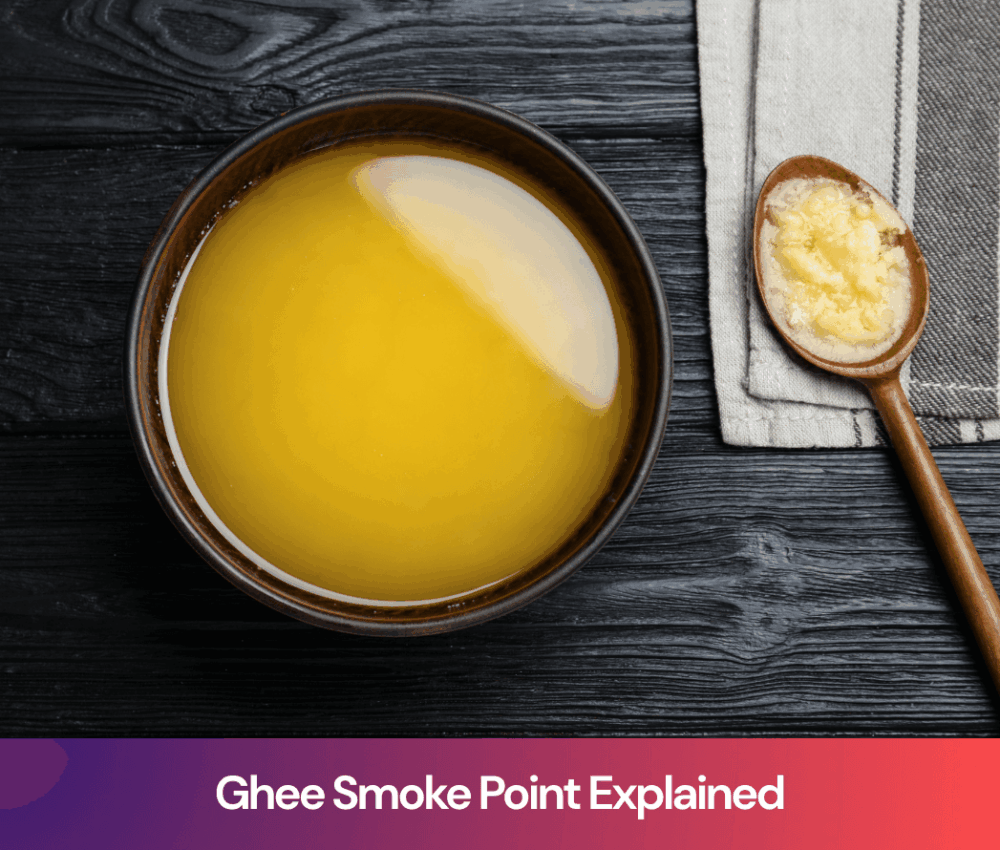
Smoke point is the temperature at which fat begins to smoke and chemically break down.
Once this happens:
Stat 1: When oils exceed their smoke point, oxidation increases significantly, producing compounds linked to inflammation.
Ghee has a naturally high smoke point because milk solids and moisture are removed during preparation. That’s why it stays stable even under intense heat.
Not all fats are built for Indian kitchens.
Here’s how ghee compares:
Stat 2: Ghee’s smoke point is among the highest of commonly used cooking fats, making it ideal for frying and tadka.
This explains why traditional Indian recipes rely on ghee rather than butter or refined oils.
The way ghee is made directly affects its heat tolerance.
Traditional ghee is slowly heated until:
This process creates stability.
Stat 3: Studies show clarified fats with low moisture content oxidize slower at high temperatures than refined vegetable oils.
Murli amrit ghee follows traditional preparation methods, which helps maintain structural integrity when heated repeatedly.
This matters because reheating unstable oils increases oxidative stress inside the body.
Imagine preparing dal tadka.
You heat oil too much. It smokes. Spices burn instantly. The flavour turns harsh.
Now try the same with ghee.
Families who switch to ghee for high-heat cooking often report fewer digestion issues and better flavour control. This isn’t a coincidence. It’s chemistry at work.
Even high smoke point fats need proper handling.
Best practices:
Stat 4: Repeated heating of unstable oils increases lipid peroxidation, while stable fats like ghee resist this process.
This makes ghee a safer choice for daily Indian cooking.
The ghee smoke point isn’t just a technical term. It’s a practical measure of how safe your cooking fat is under heat.
High heat demands stability. Ghee delivers that stability naturally. When prepared traditionally, like Murli amrit ghee, it supports flavour, digestion, and long-term health.
Choose fats that respect your cooking style. Your body will notice the difference.
1. What is the smoke point of ghee?
Around 250°C, making it suitable for high-heat cooking.
2. Is ghee better than oil for frying?
Yes. It remains stable and resists oxidation better.
3. Does ghee lose nutrients when heated?
Minimal loss when used correctly below smoking stage.
4. Can ghee be reused after frying?
It’s better to avoid reuse to prevent oxidation.
5. Why choose Murli amrit ghee?
Because traditional preparation improves heat stability and purity.